
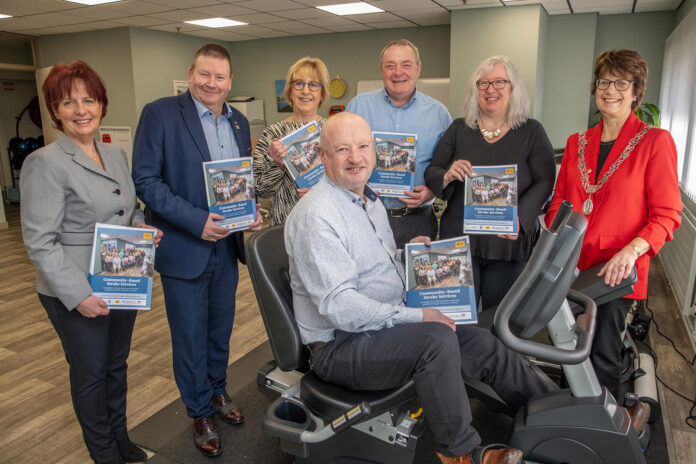
A new report from Cork Stroke Support (CSS) and University College Cork (UCC) has found that 29 community-based services are available to stroke survivors across Munster.
The report drew on the findings of an online survey and interviews that explored the experiences of 24 healthcare professionals and eight stroke survivors and their families across the province. It has been funded by a Research Ireland New Foundations grant.
The study, which was led by Dr Helen Kelly at the School of Clinical Therapies at UCC, found that there were 20 individual organisations/volunteers that provide stroke support services in Munster, five of which operate in more than one county. Of these, 8 are located in Cork, 6 in both Kerry and Limerick, 4 in Tipperary, 3 in Waterford and 2 in Clare. In addition to these regional services, 5 national organisations also provide support.
MENTAL HEALTH SUPPORTS LACKING
The aim of the study was to identify where stroke-specific support organisations were located and what services they provide in their region, and to collate that information into a single reference document for stroke survivors and their families.
The report also identified gaps in service provision however, with the survivors noting that supports for their mental health was often lacking.
The report breaks the support services available down into eight categories – Healthcare Professionals, Psychological (counselling), Exercise and Movement Activities, Educational (education and training), Social Activities, Peer Support Groups, Communication Support and Family/Carer Support – and identifies where each specialism is available, allowing information to be accessed at a glance.
As well as providing a directory of information, the report outlines the benefits of increased community-based services to survivors and their families.