

Ide O’Shaughnessy, University of Limerick; Christina Hayes, University of Limerick, and Katie Robinson, University of Limerick
Some of the most powerful interventions to slow or improve frailty are also the most ordinary: regular movement, adequate nutrition and meaningful social connection.
It almost sounds too simple for a condition now recognised as one of the strongest predictors of hospitalisation, disability, poor recovery from illness or surgery, nursing home admission and death in later life.
Older adults living with frailty have less physiological reserve: the body’s spare capacity to cope with illness, injury or stress. A relatively small event, such as a chest infection, a medication change or even a few days in bed, can trigger a sudden loss of independence. Meanwhile, a more robust older adult may recover quickly from a more serious illness.
How we age can vary greatly, even between people of the same age. One 82-year-old may stay active and independent, while another struggles to rise from a chair and becomes increasingly dependent after a short hospital stay.
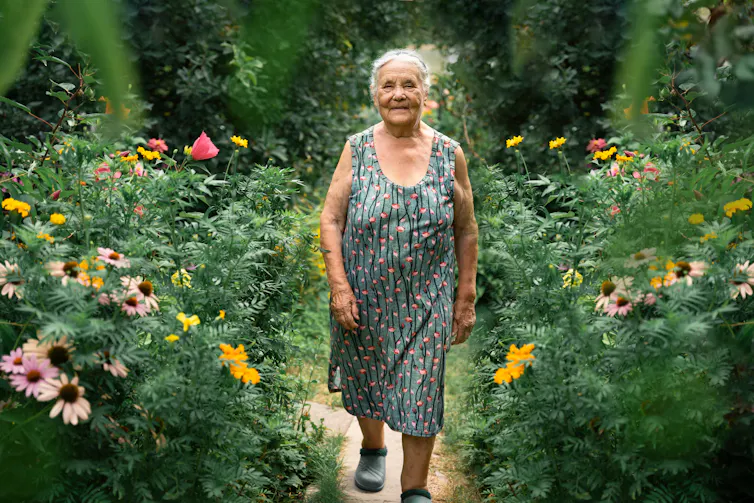
The growing recognition that frailty, rather than age alone, shapes how people age is changing the way clinicians and researchers think about later life. While living longer is one of society’s greatest achievements, frailty and its evidence-based management have become increasingly important public health and clinical concerns.
Checking for frailty is now routine in many healthcare settings for adults aged over 65. Assessment increasingly focuses on how robust or frail a person is physically, cognitively and socially.
Frailty assessment
There are two main ways frailty is assessed. The first sees frailty as a physical syndrome marked by weakness, exhaustion, slow walking speed, unintentional weight loss and low physical activity. People with one or two of these features may be considered “pre-frail”, while those with several are considered frail.
The second approach views frailty as the accumulation of health problems over time. In this model, chronic illnesses, mobility problems, memory difficulties, hearing or vision loss, poor nutrition and social isolation all contribute to a reduced ability to cope with a stressful event for the body, such as a fall, infection or hospital stay.
Frailty is often spoken about as though it is permanent, something a person simply becomes. You are either robust or frail, independent or dependent, strong or declining. But research suggests the reality is far more fluid.
Frailty exists on a spectrum from robustness to pre-frailty, mild frailty, moderate frailty and severe frailty, and people may move in either direction over time. Although frailty often progresses, it can sometimes be delayed or improved, depending on the underlying cause and the support available.
Frailty isn’t always permanent
A large review involving more than 42,000 older adults found that, over an average follow-up period of almost four years, around 14% of people improved their frailty status, nearly 30% became more frail, and just over half remained stable. The findings suggest frailty is dynamic and, for some people, potentially reversible.
Rather than simply asking whether someone is frail or not, clinicians are increasingly looking at where a person sits on the frailty spectrum and what supports might help build resilience. Early signs such as slowing down, fatigue or unintentional weight loss are now recognised as an important opportunity for intervention through relatively simple lifestyle changes.
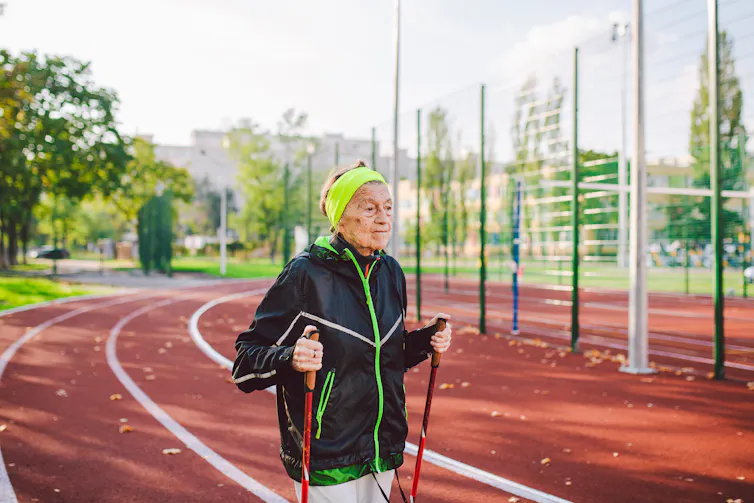
Regular physical activity that includes resistance-based exercise, such as using weights, elastic bands or body weight to build strength at least twice per week, can help improve frailty or slow its progression. The benefits can be even greater when exercise is combined with nutrition or cognitive interventions, such as memory, attention and problem-solving activities.
An Irish trial of a home-based frailty programme delivered through primary care targeted older adults living with mild frailty or less. The programme combined strengthening exercises, regular walking and dietary protein guidance. Frailty rates in the intervention group fell from 17.7% to 6.3% after three months, while they slightly increased in those receiving usual care.
Recovery also appears to depend on more than physical health alone. In a study of more than 5,000 adults aged 75 and older, nearly one-third of those who were frail at the start of the study recovered to a less frail state within two years. Recovery was more likely among those who took part in exercise-based social activities, rated their own health more positively, trusted their community and regularly interacted with neighbours.
Activities that challenge memory, attention and problem-solving can support cognitive health and may help reverse frailty. Psychological resilience, the ability to adapt to stress or difficult life events and recover from them over time, has also been linked to better frailty outcomes.
Frailty is now recognised as more than an inevitable part of ageing. While it remains a powerful predictor of hospitalisation, disability and death in later life, growing evidence shows it can often be prevented, slowed or improved. Everyday choices, including how much we move, who we spend time with and the activities that give us purpose and connection, can help support healthier ageing.
Ide O’Shaughnessy, Associate Professor, School of Allied Health, University of Limerick; Christina Hayes, Assistant Professor, Ageing Research Centre, University of Limerick, and Katie Robinson, Professor of Occupational Therapy, University of Limerick
This article is republished from The Conversation under a Creative Commons license. Read the original article.