
A new national survey commissioned by STEM South West, the not-for-profit organisation promoting STEM education and careers, shows there is strong public support for preparing the next generation with the skills needed to succeed in a changing world. Three-quarters of adults believe coding and AI literacy should be taught in schools, with junior secondary (12-15 years) seen as the ideal stage. Young adults strongly favour early AI education, while older adults and lower-income groups are more likely to prefer optional learning.
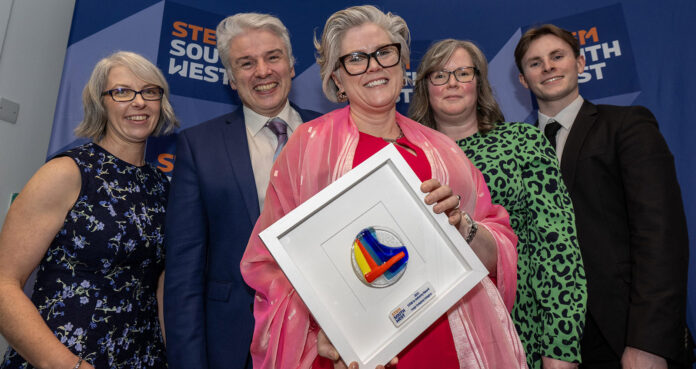
These results come on the back of the STEM South West Awards 2025, last Thursday night at Cork County Hall, which celebrated excellence in Science, Technology, Engineering, and Mathematics (STEM). The awards recognise individuals and organisations whose achievements drive innovation, education, and community engagement in the STEM sector across the South West region, which collectively employs over 75,000 people in STEM-related industries.
“This latest research shows that AI is at the forefront of our times, and there is strong demand for adoption in school,” Mary Good, Managing Director of Advanced Medical Services and Chair of STEM South West, said. “There’s a recognition that young people must be equipped with the skills to thrive in this new digital landscape. Tonight’s awards showcase the people and organisations who are already leading the way in preparing our next generation for the opportunities and challenges ahead.”
Key insights from the STEM South West AI & Future Skills survey show that support for AI education cuts across demographics, with 75% of adults overall backing the introduction of coding and AI literacy in schools, even among groups most worried about changing job descriptions as a result of AI progression.
Also, younger adults show a pragmatic outlook, with 79% of 18-24-year-olds concerned about job security with advances in AI, yet a strong majority supporting the teaching of coding and AI skills in schools, particularly at junior secondary level (12-15 years).
Speaking at the awards ceremony, Ms. Good added, “This evening is all about celebration and recognition. It is also a time for us to reflect on what we have achieved in the past year and embrace the many opportunities of the future, while recognising the rapidly evolving global landscape and its challenges. Our AI & Future skills survey throws a focus on the opportunity for growth in education across Science, Technology, Engineering and Maths as we prepare and adapt to changing demands in the workplace.”
2025 Award Winners
The STEM in Industry: Company of the Year award celebrates organisations creating a proactive, inclusive, and supportive environment for STEM, both internally and through outreach initiatives. CompuCal Calibration Solutions won the Small/Startup (up to 50 employees) category; MACOM won the Small to Medium category (50 – 249 employees) and Analog Devices won the Large (250+ Employees) category.
STEM in Education: Educational Initiative of the Year award, recognises educational institutes, departments, and classroom-led initiatives that foster inclusive STEM learning. At Primary Level, Firies National School, Killarney were winners, with Cork’s Coláiste Muire Crosshaven top of the Secondary Level category. The Third Level award went to the STEM Teacher Internship Programme.
STEM in the Community
Johnson & Johnson won the Best Expo Exhibitor (Large) category in the STEM in the Community category, with Reliance being awarded the Best Expo Exhibitor (Small).
Inspirational STEM Volunteer of the Year went to Shane Ruddle, Gilead and STEM Initiative of the Year Award was awarded to Scoil Mhuire Junior School, Cork. Michael Loftus from MTU was awarded the STEM Person of the Year award.
Patrick Doyle, South West Regional Manager, IDA and member of the judging panel, said:
“Congratulations to STEM South West and all of the finalists and winners for their commitment of time, expertise, and resources in support of STEM skills development and education. Their efforts will provide opportunity for the next generation and future-proof the talent pipeline to sustain the long-term success of STEM industries across the South West region.”