

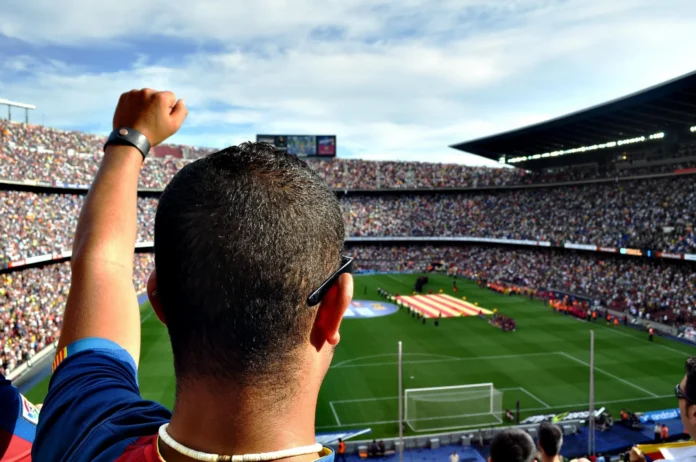
Sport becomes hard to leave when it feels alive right to the end. A game may begin in a simple way, with one team pressing well and the other trying to settle, yet something deeper starts to build after a while. The crowd reacts to every small moment. A loose pass feels bigger than it should. One shot, one tackle, or one late run can suddenly seem like the centre of the whole night. That is what makes people stay. It is not always a flood of action. Very often, it is tension. It is the feeling that one small change could turn everything.
Crowd noise gives the game a second heartbeat
A match on mute is never the same. Sound changes how people feel the game. A low murmur can turn into a roar in one second, and that roar tells everyone that something important may be coming. The crowd does not only react to goals. It reacts to pressure, danger, and near misses. That shared noise gives the match another layer of life.
Players feel it too. A home team can grow stronger when the stands come alive. An away side can feel the weight of a loud stadium pressing down on every touch. This is one reason sport can feel so gripping even when the score stays tight. The sound keeps the air full.
Fine margins make every touch matter more
The best games are often decided by little things. One player arrives a second late. One defender slips out of line. One shot hits the post instead of the net. These are small margins, yet they shape the whole story. A wide gap on the scoreboard can kill suspense, but a narrow game makes each move feel sharp.
That is where attention locks in. People watch more closely because the game no longer feels safe or settled. It feels fragile. The next moment could reward the brave side or punish the team that switched off too early.
Tension keeps moving even when the pace slows
A great match does not need nonstop speed. Sometimes the pace drops, the legs get heavier, and the game becomes even more interesting. This happens because pressure starts to replace movement. The mind begins to race faster than the players do. Fans begin to read every pause, every substitution, and every touch near the box as a possible turning point.
This is also why sport keeps pulling in so many kinds of attention. Some people watch for pride. Some watch for drama. Some follow the same rising tension that draws people to horse racing betting, where one small shift in pace or position can change the full mood in an instant. The shape is different, but the feeling is close. The heart reacts to uncertainty.
No lead ever feels fully safe
That is one of the strongest things about sport. Even when one team is ahead, the game can still feel open. A single error can pull the whole contest back into doubt. That lack of comfort keeps people watching. It keeps them talking too. Nobody wants to miss the moment when control slips and the story bends.
The games people remember are rarely simple
A match stays in the mind when it carries emotion from start to finish. It may be the noise, the pressure, or the way the score stayed close enough to keep everyone on edge. It may be one small act that changed the whole night. What matters is that the game kept asking a question and refused to answer it too early.
Sport holds attention because it keeps breathing
That may be the clearest truth of all. Sport becomes hard to look away from when it keeps changing shape without losing its tension. The crowd lifts it, the small margins sharpen it, and the uncertainty keeps it alive. People do not only watch for results. They watch for the feeling that something is still hanging in the air.