
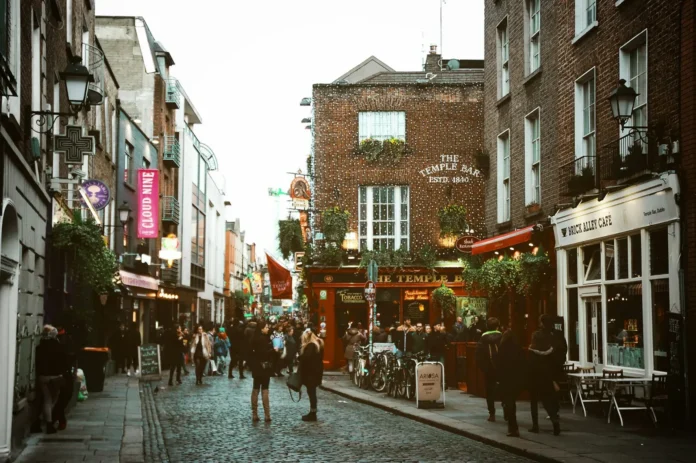
Walk the main street of most Irish market towns and you can usually still point to where the bookmaker was. Sometimes the fascia remains. Often the unit is now a coffee shop, another retailer or simply vacant.
The numbers behind that impression are stark. Ireland had 1,385 licensed betting shops in 2008. By the end of 2024 there were 731, and that fell again to 684 by the end of 2025. The decline has continued in 2026, with Ladbrokes announcing plans in March to close another 39 Irish shops.
That is a loss of more than half the country’s betting shops in less than two decades, and smaller towns have felt it particularly sharply.
What changed in 2019
The decline accelerated after betting duty was doubled from one percent to two percent in 2019.
According to Irish Bookmakers Association figures, only nine shops closed during the three years before the change, compared with 109 over the following five years. The tax increase was not the only factor. Online betting, Covid, higher wages and property costs all played a role.
But the structure of the tax makes retail bookmakers unusually sensitive to it.
Ireland charges betting duty against turnover rather than bookmaker profit. That means the tax is applied to the money staked, even though most of that money is subsequently returned to customers as winnings.
A typical betting shop may retain only around 10 to 15 percent of stakes as gross win before paying wages, rent, commercial rates, insurance, utilities, data and picture rights, compliance costs and tax.
A busy shop can therefore still become unprofitable if operating costs rise while its gross margin remains thin.
Online has already overtaken it
The clearest evidence of where the market is moving can be seen in Revenue figures.
Betting duty receipts rose from €102.7 million in 2023 to around €141.2 million in 2024, with the increase driven heavily by remote betting.
The shift became even clearer in early 2026. In the first quarter, taxable online betting turnover passed €1 billion for the first time, reaching more than €1.2 billion.
Traditional betting turnover moved in the opposite direction, falling sharply compared with the previous quarter.
The number of traditional operators paying betting duty had fallen to 15, while the number of remote operators stood at 66.
Frank Houghton, a social sciences lecturer at the Technical University of the Shannon who specialises in gambling harm, has described Ireland as being on a one-way trajectory towards online gambling.
The view from the industry
When discussing this with Simon Winter, author at Casino.com Ireland, he made the point that retail decline and online growth are often reported as if one simply replaced the other, when the customer bases only partly overlap.
That distinction is worth holding onto. The person who called into a shop on Saturday afternoon for a small each-way bet and a conversation is not necessarily the same customer opening an account on a phone late at night.
The disappearance of a betting shop is therefore not only a change in where the same transaction takes place. It can also represent a wider change in how, when and by whom betting takes place.
Why rural towns feel it more
The Irish Bookmakers Association argues that closures hit smaller towns particularly hard because an individual shop may support several jobs while also contributing commercial rates and footfall.
Industry figures suggest the wider betting sector still supports more than 6,000 jobs and contributes over €170 million annually to the Exchequer through betting duty, income tax, USC, PRSI, corporation tax and VAT.
The retail side, however, continues to shrink.
Ladbrokes’ announcement in March put another 226 jobs at risk across 39 stores. The company cited rising costs and long-term changes in customer behaviour among the pressures on its retail estate.
In places such as Fermoy and Mitchelstown, those pressures are visible on the street rather than in a spreadsheet. The Avondhu has seen the pattern before: Hackett’s Bookmakers in Fermoy was among a series of closures reported locally back in 2016.
One more closed unit does not transform a town centre by itself. Added to bank branches, post offices and other disappearing services, however, the effect accumulates.
A new regulatory system arrives
The timing adds another layer of uncertainty.
Ireland is now moving betting operators into the licensing regime created under the Gambling Regulation Act 2024. The Gambling Regulatory Authority of Ireland opened applications for in-person and remote betting licences in February 2026.
Bookmakers already faced licensing costs before the reform, but the new system introduces a broader application process, suitability assessments, premises requirements and additional compliance obligations.
The Irish Bookmakers Association has argued against further increases in betting duty during that transition.
Government tax papers have repeatedly modelled higher rates, including increases of half a percentage point and a full percentage point. For now, however, betting duty remains at two percent.
An old fixture, quietly going
There is no single explanation for the disappearance of the Irish betting shop.
Customers moved online. Covid accelerated behavioural changes. Operating costs increased. A turnover-based tax put additional pressure on narrow retail margins.
Together, those forces have changed a business that once appeared permanent on Irish main streets.
The bookmaker was never quite treated like the bank branch or the post office when debates about disappearing local services took place.
Yet it employed people, paid rates and occupied a shopfront.
For decades, it was simply part of the furniture of an Irish town.
Increasingly, it is not.
About Casino.com
Casino.com is a comparison platform built to help players make informed decisions in regulated online casino markets. It publishes operator reviews, current bonus information and jurisdiction-specific guides, with an emphasis on transparency and player protection. Its editorial team follows licensing and market developments across Europe, including contributions from writers such as Simon Winter.
18+. Gambling involves financial risk. Free and confidential advice, counselling and support for anyone affected by gambling-related harm is available at GamblingCare.ie.