

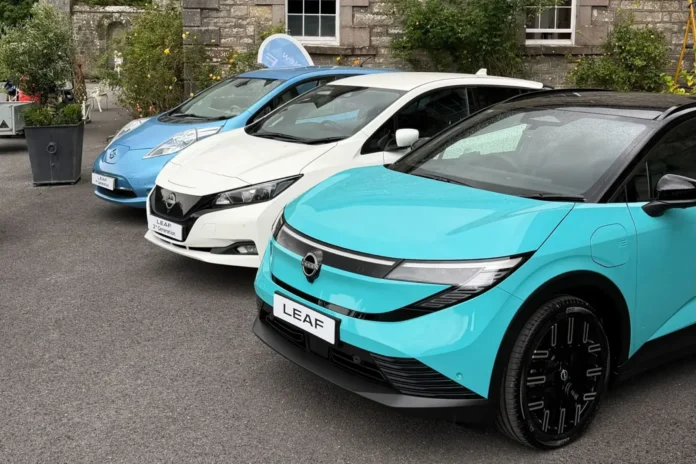
Nissan recently launched the third generation of their electric Leaf, which was first seen on Irish roads back in 2010. Sixteen years ago, it was the first mass-market electric car available in Ireland and the range with a full charge was around 120km. That range sounds ridiculous nowadays, but some manufacturer had to make a start with a fully electric car.
At the launch of the third generation of the Leaf in Bellinter House, near Navan, two weeks back, we saw the three versions of the Leaf lined up together outside the hotel. There in the mild September rain sat the original version from 2010, the second generation from 2018 and the latest version which looked really classy, bearing little resemblance apart from the name to the earlier versions.
In the early day of the Leaf, and also for the second generation, the charging was done via an old-style CHAdeMO port. Now you get a modern CCS charger and if you are lucky enough to have two Nissan electric cars in your driveway the same charger will work for both.
CHAdeMO emerged from Japan in the early 2000s as the world’s first commercial DC fast-charging protocol. But now most car companies seem to favour CCS chargers.
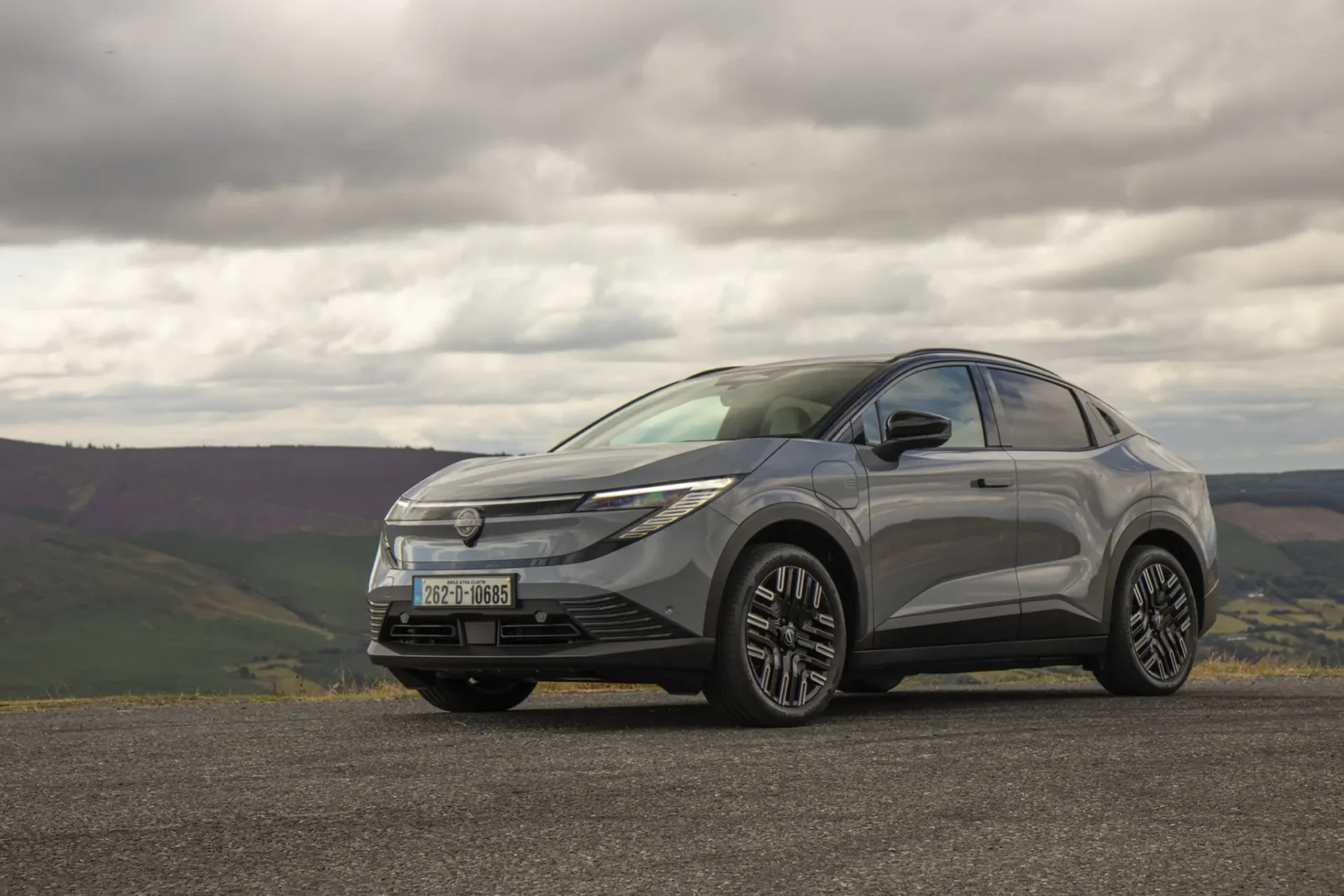
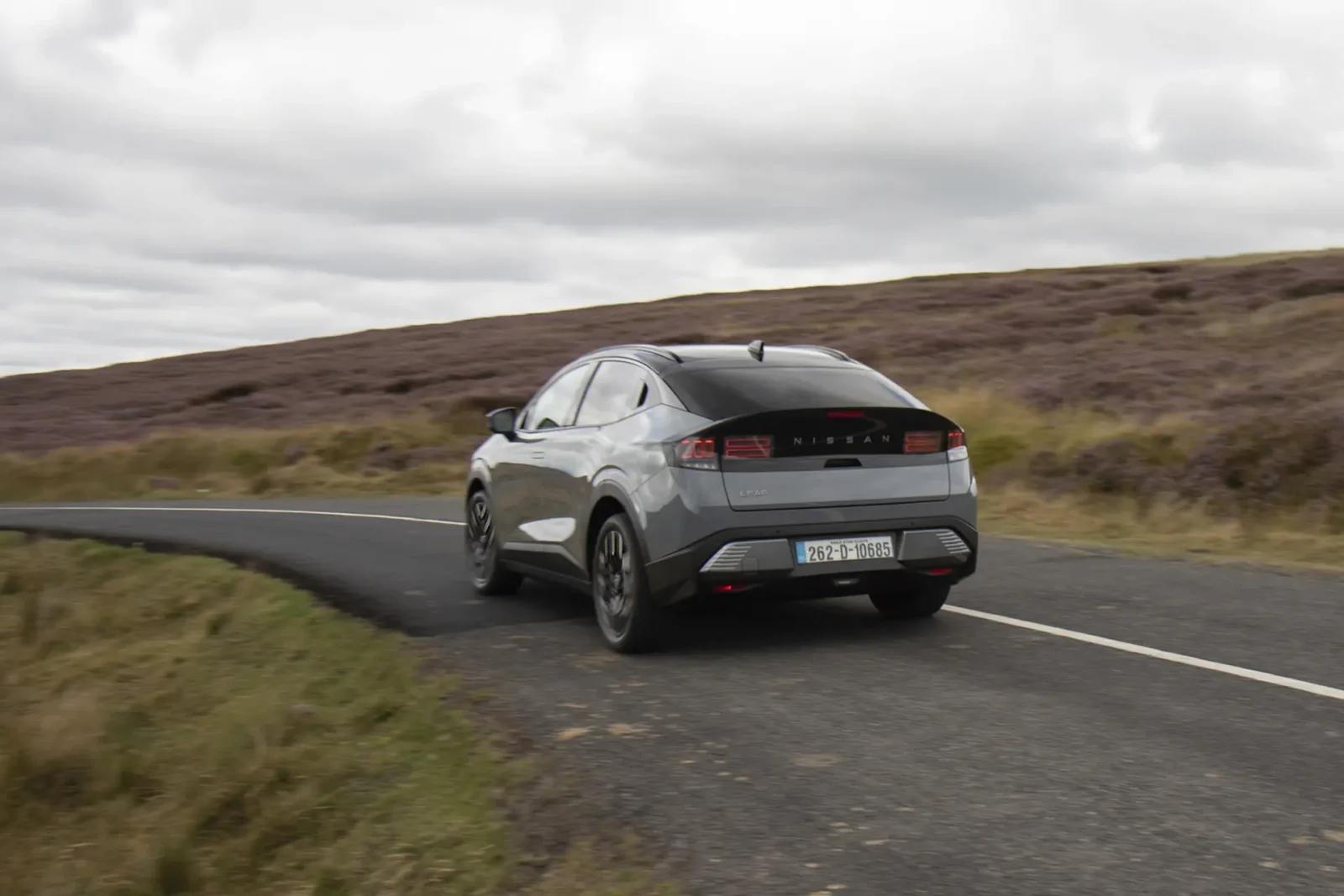
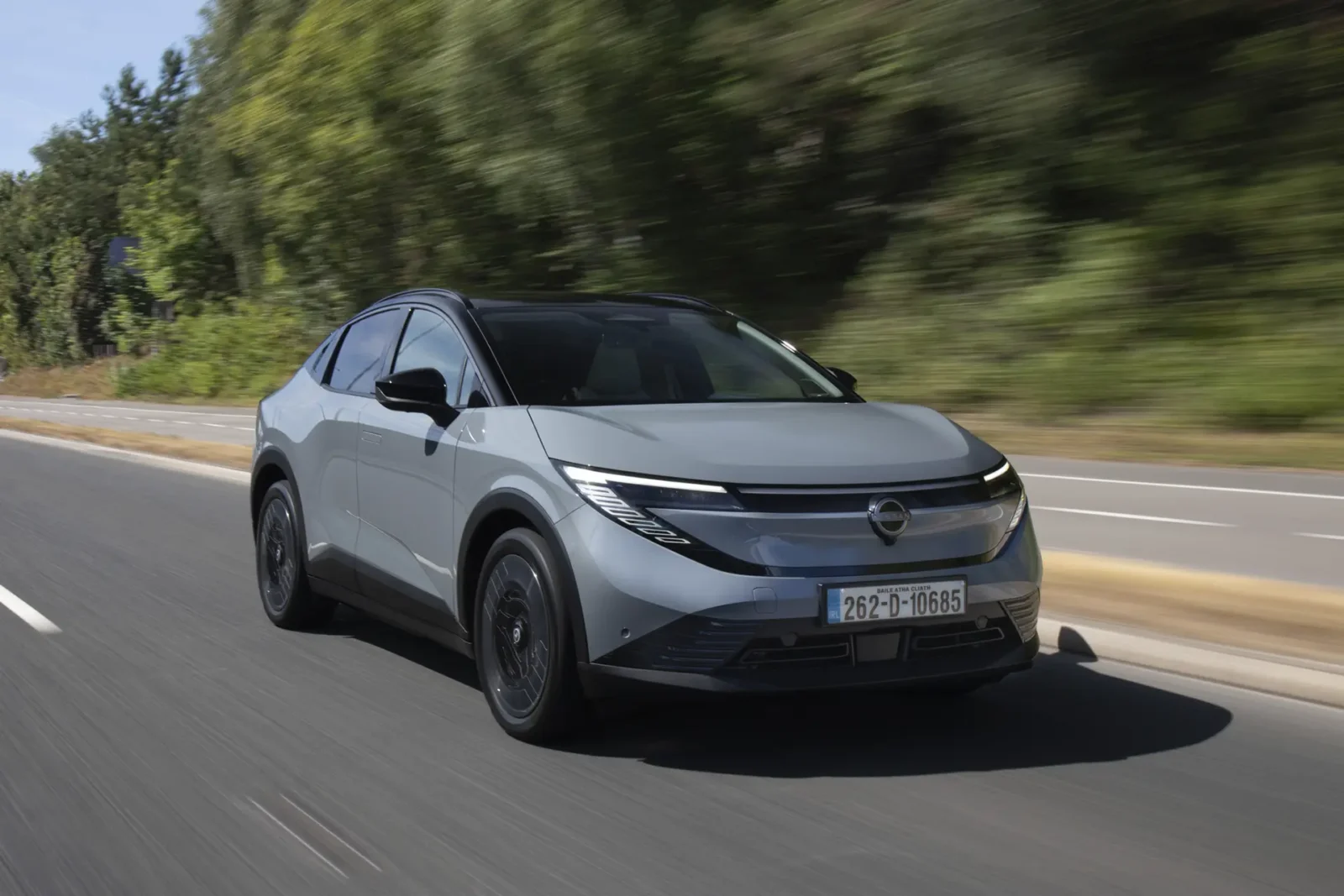
For the third generation of their Leaf, Nissan has ditched the hatchback look and now they say the Leaf is a Crossover, but certainly not a very high one. At the front you get sleek new-style lights and a single light all the way across the front of the car. And the lights are the back are really futuristic looking.
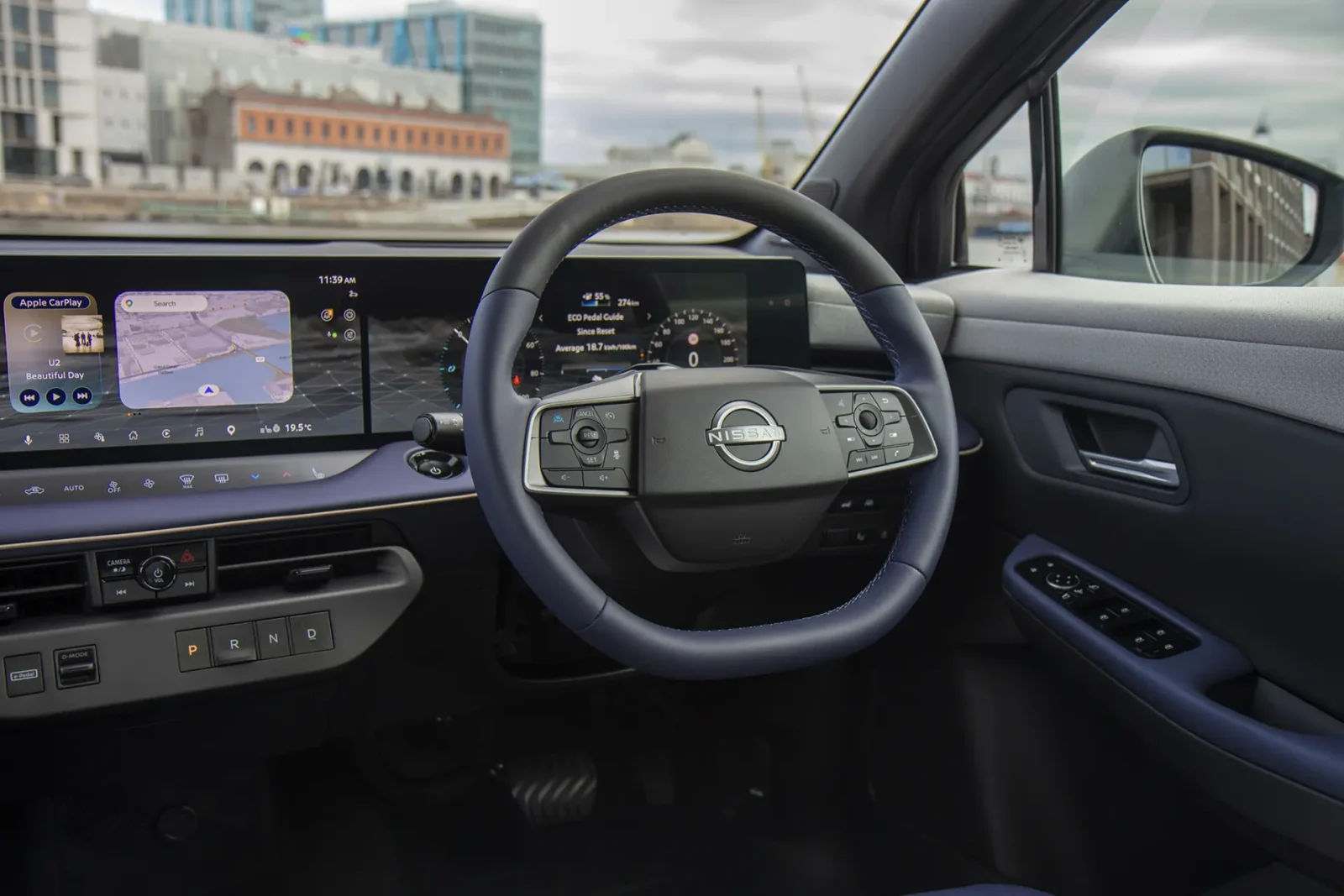
Interiors differ depending on the spec, but the version I drove was a bit dark inside. However, a new style sunroof, known as a ‘Dimming Panoramic Roof’ saved the day and it really brightens the interior décor. There is room in the back seat for three people and if you have only two back-seat passengers they can avail of the arm rest.
You get a decent boot space, officially 437 litres but there is no Frunk, which is not really a problem. The only item missing was a rear wiper; well, we don’t expect a spare wheel anymore.
As with nearly all electric cars, the Leaf has two battery options. The 52kWh battery offers up to 424 kilometres range with a full charge, while the 75kWh battery claims a top range up to 622 kilometres. Getting to 622km is going to difficult and much depends on your own driving habits. I drove the car with the larger battery, and I reckon 520km would be a more realistic figure and a huge improvement from 2010.
Prices start at €36,095 for the version with the smaller battery. After that if you want a longer range then you will have to pay a bit more.
Looking back ten or 16 years, maybe we were all bit hasty moaning about charging times and poor range for new electric cars. We should have known that it was only a matter of time before the car companies sorted the range anxiety problem but very few reach the claimed WLTP range
Nissan are really ‘motoring’ right now with two more cars on the way. The small electric Pixo is also available now, and on the way is strangely named Kicks, which will be a compact B-segment Crossover with Nissan’s e-Power hybrid technology.
The Kicks will be the tenth model to be built at Nissan’s Sunderland plant, which this year celebrates its 40th anniversary.
The Sunderland plant came about from Nissan’s deal with former UK Prime Minister Margaret Thatcher as she tried to bring employment back to the north east of England. The site of the old RAF base in Usworth was offered to Nissan at agricultural prices of around £1,700 sterling per acre. Now, 12 million vehicles have been built in Sunderland since the first Nissan Bluebird rolled off the production line there in 1986.