

Ask any builder or estate agent in Ireland what actually shifts a house’s value or a family’s quality of life, and you’ll get a fairly consistent answer, and it rarely matches what’s trending on interior design accounts. Irish housing stock is old by European standards, the weather is relentless on exteriors, and heating costs have made energy efficiency less of a lifestyle choice and more of a financial necessity, so the improvements that actually get done tend to reflect those pressures rather than pure taste.
Attic and Wall Insulation Still Wins on ROI
Most homes built before the 1990s were constructed with insulation standards that would fail modern building regs outright, which is why attic insulation and cavity wall insulation remain the two most commonly completed upgrades in the country. SEAI grants have made cavity wall insulation particularly attractive, since a lot of the cost gets offset before you even factor in the heating savings, and homeowners typically see a noticeable drop in their gas or oil bill within the first winter.
Solid-wall and stone-built houses, common in older rural and inner-city properties, don’t have a cavity to fill, so external insulation gets used instead, and while it changes the exterior profile of the house slightly, it avoids eating into internal floor space the way internal insulation would.
Heat Pumps Are Replacing Oil Boilers Faster Than Expected
Oil heating has been the default in a huge number of Irish homes for decades, but rising fuel prices combined with SEAI’s Better Energy Homes grant have pushed a lot of households toward air-to-water heat pumps instead. The catch is that heat pumps only perform well when the house has been properly assessed first, because an undersized or oversized unit installed without a heat loss survey will run inefficiently and leave people paying more than they expected. Anyone looking into this should get a proper BER assessment done before choosing a contractor, and should be wary of anyone quoting a price without first inspecting the property.
Kitchens Get Renovated More Than Any Other Room
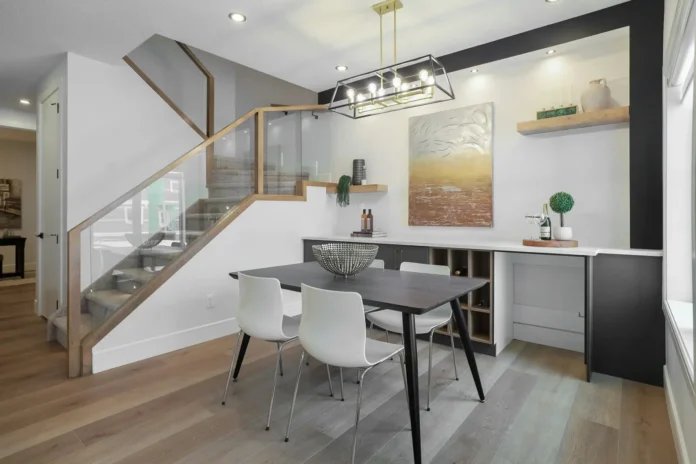
Kitchens are consistently the most renovated room in Irish homes, and the reasoning is fairly straightforward: it’s where families actually spend their time, and a dated kitchen drags down a sale price more than almost any other single factor. Knocking through the wall between kitchen and dining room to create an open-plan space has become standard practice in semi-detached and terraced houses across the country, particularly in 1970s and 1980s builds where rooms were originally kept small and separate.
Shaker-style cabinetry and quartz worktops dominate current requests, though there’s been a noticeable move toward darker cabinet colours and matte finishes replacing the all-white kitchens that were everywhere a decade ago.
Bathrooms Are Catching Up
Bathroom renovations run a close second to kitchens, and the driver here is usually a suite that’s twenty or thirty years old, with cracked grout, an awkward layout, or fittings that just look tired next to the rest of a renovated home. Walk-in showers have almost entirely replaced the old bath-and-shower combo units, and underfloor heating gets requested constantly, mostly because Irish bathroom floors in winter are miserable without it.
The one area people consistently underestimate is waterproofing. Skipping proper tanking under tiles is the single biggest cause of expensive repair jobs a few years down the line, so it’s worth pushing back on any contractor who wants to cut corners there.
Extending Rather Than Moving
House prices and the cost of stamp duty, solicitors’ fees, and moving itself have made extending a far more attractive option than relocating for a lot of Irish families, especially once children arrive and space runs short.
Single-storey rear extensions are the most common route, usually adding a larger kitchen-diner or an extra reception room, and they generally fall under exempted development if they stay within specific size limits, though it’s always worth checking with the local council before assuming that applies. Attic conversions solve a similar problem for anyone needing an extra bedroom or a home office, and they’re often cheaper than a ground-floor extension since there’s no foundation work involved, though the roof structure needs to be surveyed first to confirm it can take the extra weight.
Windows, Doors, and Dealing With Irish Weather
Triple glazing has become far more common than it was even five years ago, particularly for houses in exposed or coastal locations where wind-driven rain finds its way through anything less than a well-sealed frame. Composite front doors have taken over from timber in a lot of renovations too, since they hold up better against the weather and offer stronger security, all while still coming in enough colours and styles to suit period house fronts. The quality of the installation matters as much as the product itself here, so it’s worth asking directly about U-values and warranty terms rather than assuming one triple-glazed window is the same as another.
Gardens Have Become an Extension of the House
Garden rooms have exploded in popularity since 2020, largely because they offer a way to add a home office or extra living space without the disruption of construction inside the house, and many fall under planning exemptions depending on their size and position on the property.
Decking and patios have seen similar growth, though drainage needs serious thought before any of this work starts, since Ireland’s rainfall means poorly planned landscaping can send water pooling straight back toward the house foundations.
Finding Contractors Who Won’t Cause You Problems
None of these projects go well without a supplier who actually knows what they’re doing, and vetting tradespeople properly before signing anything is where a lot of renovation budgets either hold up or fall apart. Checking insurance, asking for references from jobs completed in the last year, and reading independent reviews rather than testimonials handpicked by the contractor all make a real difference.
Renovation priorities in Ireland are shaped heavily by the climate, the age of the housing stock, and the grants currently on offer, and homeowners who plan around those realities rather than around trends tend to end up with work that actually holds its value.