

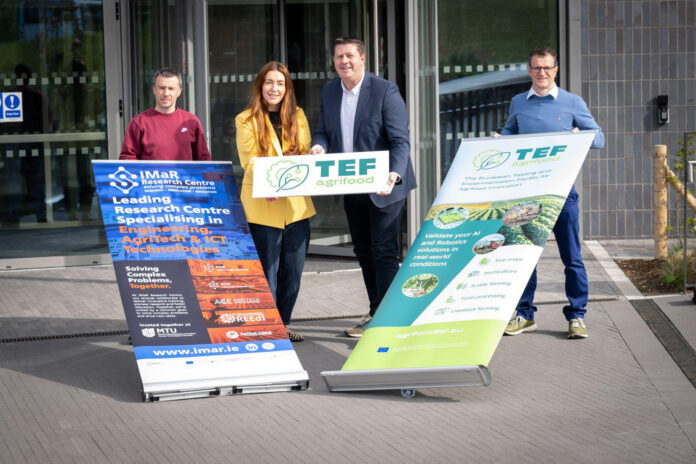
Irish AgriTech and food SMEs will gain access to advanced European testing and validation services after Munster Technological University (MTU) was named the tenth node in agrifoodTEF, a European network of Test and Experimentation Facilities for AI and robotics in the agrifood sector.
MTU will deliver Ireland’s participation in the network through the IMaR Research Centre and AgriTech Ireland Cluster at its Kerry campus. The University will receive €460,000 to support its involvement, funded through the EU Digital Europe Programme and co-funded by Research Ireland through Lero, Research Ireland’s centre for software. Through the new Irish node, SMEs will be able to test, validate, and accelerate the market adoption of AI and robotics solutions for the agrifood sector.
The network connects research centres, test facilities and industry partners across Europe, with a focus on helping companies developing digital and automation technologies for agriculture and food production to reduce risk and accelerate market adoption.
Through the partnership, MTU will provide structured validation services – typically eight to twelve weeks – covering technical performance, systems integration, deployment readiness and business model validation. Companies will receive evidence-based findings designed to strengthen investor and customer confidence ahead of wider rollout.
AgriTech Ireland works with over 50 SMEs each year, connecting businesses with technical expertise, research facilities, funding opportunities and industry partnerships. The new node status creates a direct link between those SMEs and the wider European network, offering a structured pathway from early-stage innovation through to market-ready solutions.