

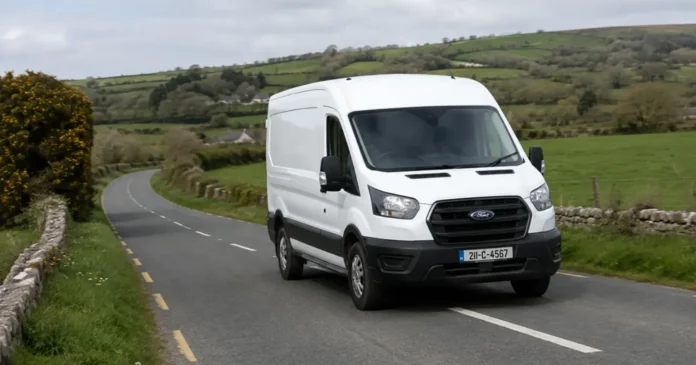
For thousands of tradespeople, farmers, delivery drivers and mobile service providers across rural Ireland, a van is far more than a vehicle – it’s the backbone of their livelihood. From North Cork to West Waterford, commercial vans help keep local economies moving, allowing businesses to reach customers spread across towns, villages and countryside that larger operators often overlook.
But while demand for local services remains strong, the cost of running a van-based business has risen significantly in recent years. Fuel, maintenance, vehicle replacement, compliance and financing have all become larger expenses, putting pressure on sole traders and small business owners already operating on tight margins.
For many operators, van insurance is another essential business expense that must be factored into annual costs, alongside fuel, servicing and vehicle maintenance, particularly as replacement values and repair costs continue to increase.
Commercial vans remain essential to Ireland’s economy
Despite rising costs, businesses continue to invest in commercial vehicles.
According to the Society of the Irish Motor Industry (SIMI), 32,779 new light commercial vehicles (LCVs) were registered in Ireland during 2025, representing a 7% increase compared with the previous year. The figures highlight continued demand from trades, logistics companies, construction firms and rural businesses despite ongoing economic pressures.
Commercial vans remain indispensable across rural Ireland, where public transport is limited and businesses often travel long distances between customers.
Fuel remains the biggest day-to-day expense
For many rural operators, fuel is the single largest ongoing operating cost.
Unlike businesses in cities, rural contractors may drive hundreds of kilometres every week simply travelling between jobs. Whether it’s a plumber travelling between villages, an electrician covering multiple counties or a local delivery company servicing remote customers, mileage quickly adds up.
Recent estimates suggest that operating a typical medium-sized diesel commercial van in Ireland can cost between €5,500 and €9,000 per year before finance or depreciation are included. Fuel alone can account for €3,500 to €4,500 annually, making it the largest recurring expense for many businesses.
While diesel prices have stabilised compared with the sharp increases experienced during the energy crisis, they remain a major concern for businesses that cannot easily reduce travel.
Maintenance costs are climbing
Modern vans are safer, more efficient and more technologically advanced than ever before.
However, that sophistication comes at a price.
Routine servicing, tyres, brakes, suspension components and diagnostic repairs have all become more expensive as vehicles rely increasingly on electronic systems and advanced safety technology.
Regular servicing is also essential for maintaining reliability. A breakdown on a rural road can mean missed appointments, delayed projects and lost income – costs that often exceed the repair bill itself.
Many business owners are also choosing to keep vans for longer before replacing them, increasing the likelihood of higher maintenance bills as vehicles age.
Compliance is another unavoidable expense
Running a van-based business involves far more than simply buying fuel.
Commercial vehicle owners must also budget for:
- CVRT testing
- Motor tax
- Servicing
- Tyres
- Repairs
- Vehicle inspections
- Business insurance
- Replacement tools and equipment
Each individual expense may appear manageable, but together they create a significant annual operating cost.
For sole traders, these costs arrive regardless of how busy business happens to be during the year.
Rural businesses face unique challenges
Unlike urban businesses, rural operators often have no option but to travel.
Customers may live 20 or 30 kilometres apart, suppliers can be located in neighbouring counties, and emergency call-outs frequently require long-distance journeys.
That means more fuel, greater vehicle wear and longer working days.
The challenge is particularly evident in counties like Cork, Limerick and Waterford, where many service businesses cover wide geographic areas while competing on price with firms based closer to larger population centres.
Technology is helping reduce costs
Although operating expenses continue to rise, technology is helping many businesses improve efficiency.
Popular tools now include:
- GPS route optimisation
- Fleet management software
- Digital scheduling
- Mobile invoicing
- Cloud accounting
- AI-powered route planning
- Fuel consumption monitoring
These systems reduce unnecessary mileage while improving productivity.
Even relatively small savings – such as eliminating one unnecessary journey per day – can significantly reduce annual fuel costs.
Electric vans are becoming part of the conversation
Another way businesses are attempting to reduce long-term operating costs is by switching to electric vans.
While purchase prices remain higher than diesel equivalents, lower running costs and Government incentives are making electric commercial vehicles increasingly attractive for businesses covering predictable daily routes.
According to the CSO Road Freight Transport Survey, the volume of goods transported by road increased by 2% during 2025, highlighting the continued importance of commercial transport to Ireland’s economy and the need for efficient business vehicles.
For businesses travelling shorter distances each day, lower charging costs can offset higher purchase prices over time.
However, limited public charging infrastructure in some rural areas remains a challenge for many operators.
Every kilometre matters
The economics of a van-based business often come down to efficiency.
Planning jobs geographically, maintaining correct tyre pressures, servicing vehicles on time and avoiding unnecessary idling can all contribute to lower running costs.
Many operators are also investing in vehicle tracking systems that monitor driving behaviour, helping reduce fuel consumption and improve scheduling.
Small improvements across hundreds of journeys each year can translate into meaningful savings.
Looking ahead
Despite rising costs, rural entrepreneurs continue to demonstrate remarkable resilience.
Whether repairing boilers, delivering parcels, maintaining farms or supporting local communities, van-based businesses remain a vital part of Ireland’s economy.
Growing commercial vehicle registrations suggest that entrepreneurs remain confident enough to invest in new vans, even as operating costs increase.
The challenge for the years ahead will be balancing rising expenses with customer expectations while embracing technologies that improve efficiency without sacrificing service.
For many businesses across rural Ireland, the van parked outside isn’t simply transport – it’s an office, a workshop, a delivery hub and, ultimately, the engine that keeps their business moving.