

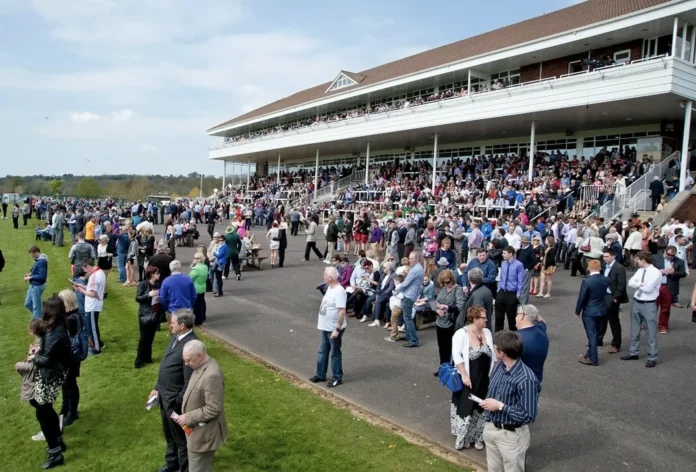
Cork Racecourse Mallow closed out its three-night Friday series last month, with a send-off for Hewick that racegoers will be talking about for a while. The bookmakers standing between the Grand Stand and the Pavilion that evening were licensed by the Office of the Revenue Commissioners, as they have been for the best part of a century. On 1st December that stops being true.
Out of Revenue’s hands
The Gambling Regulatory Authority of Ireland was set up in March 2025 under the Gambling Regulation Act 2024, and it is taking over gambling licensing in stages rather than all at once. In-person betting is the stage that lands this winter. The Authority can licence in-person operators from 1st December 2026, the date the existing Revenue licences expire, so every bookmaker standing in a ring at Mallow next spring will be there on a licence from a regulator that did not exist three years ago.
The obligations that come with it are real: verify age, pay out winnings, close an account when a customer asks, and neither facilitate credit nor take a credit card.
The phone in your pocket is on a different clock
Remote betting went first, on 1st July this year. Online casino play did not go at all. The gaming category that covers it is scheduled for applications across 2027 and 2028, so there is currently nothing an online casino could hold even if it wanted one, and anything taking casino play from customers here is operating on a licence issued somewhere else. A current listing of online casinos in Ireland and the licences they actually hold makes the point plainly: the ten sites on it are described as holding licences from recognised international regulators, which is another way of saying Malta and its neighbours. Anyone reading a claim about Irish regulation on a casino site between now and 2028 is reading about a licence that has not been created.
Back at the track
None of this troubles the ring much. On-course bookmaking is small, visible and easily traced, and the men and women taking bets at the Friday night meetings at Cork Racecourse Mallow are the least difficult part of the sector to supervise. Racecourse manager Eoghan O’Grady spoke afterwards about the atmosphere, the music and the crowds. The betting was a detail inside that, not the point of the evening.
The Authority’s attention is elsewhere, and it has said so. Its public campaign last October leaned on ESRI research indicating that harmful gambling in Ireland runs about ten times higher than earlier estimates, and that research was not measuring a summer race meeting.
What to watch from here
Two things worth keeping an eye on locally. The first is whether any smaller shop in north Cork decides the new regime is not worth the paperwork, which is how these transitions show up in a small town. The second is the Social Impact Fund, created by the Act to pay for treatment, education and research, and funded by the industry rather than the taxpayer. Sport in this part of the county has long depended on money that comes from somewhere other than gate receipts, as the GAA’s own charitable giving figures show, and the Fund will be a new line in that ledger.
The licensing phases and application dates are published by the Gambling Regulatory Authority of Ireland. Gambling here is 18+, and anyone worried about their own or a family member’s gambling can find support through Problem Gambling Ireland.