
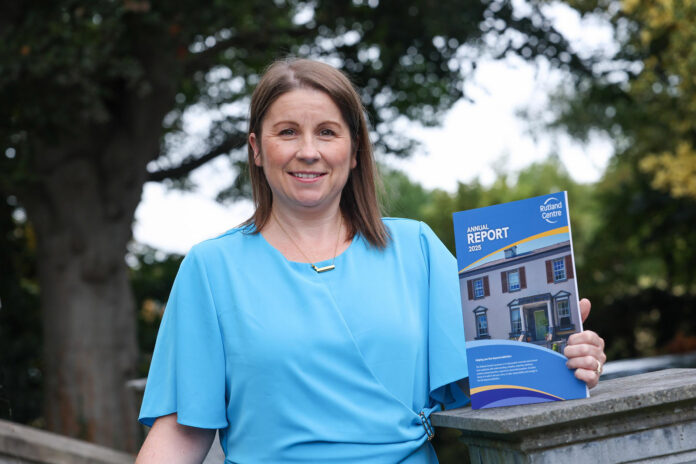
As national demand rises for addiction treatment and people present with increasingly complex and multiple addictions, The Rutland Centre, which has published its Annual Report 2025, highlighted the growing pressure being placed on treatment services.
The Centre provides detoxification, residential, outpatient and continuing-care services for people affected by substance and behavioural addictions, with its annual report showing that almost two-thirds (64%) of those admitted to its residential and outpatient programmes reported two or more addictions, while 37% of that group reported three or more.
The findings come as the latest Health Research Board (HRB) data recorded 15,422 treatment cases for problem drug use, excluding alcohol, in 2025 – an increase of 2,127, or 16%, on 2024. Separate HRB data recorded 8,798 alcohol-treatment cases, the highest annual total in the nine-year period reported.
ADDICTION PRESENTATIONS BECOMING MORE COMPLEX
The Rutland Centre’s Annual Report shows that alcohol was reported as problematic by 59% of admissions in 2025, other substances by 44% and cocaine by 40%. Gambling was cited by 15%, sex and/or pornography by 13%, and food or eating by 9%. As clients could report more than one addiction, these categories overlap.
This complexity is also evident nationally. Almost one in three alcohol-treatment cases recorded by the HRB in 2025 involved problem use of another drug. Among those cases, cocaine was the most common additional drug, reported in 72%.
STRONG OUTCOMES WHEN PEOPLE CAN ACCESS TREATMENT
The Rutland Centre reported a 98% completion rate for its residential programme and an 81% completion rate for its outpatient programme in 2025.
Of those who entered the Centre’s stabilisation programme following relapse, 52% completed the programme and returned to mainstream continuing care. More than half of those entering stabilisation completed the programme and returned to mainstream continuing care.
WIDENING ACCESS TO TREATMENT
The Centre delivered 5,545 residential bed nights in 2025, an increase of 16% since 2021, with numbers rising each year over the five-year period.
A major development during the year was the opening of a new five-bed medical detoxification unit for alcohol and cocaine in October 2025.
The Centre also continued to improve access for people who could not otherwise afford residential treatment, as well as extending its intensive ten-week outpatient programme in June 2026 beyond Dublin for the first time, opening a service in Athlone for people across the Midlands and West.
Publishing its Annual Report ahead of Budget 2027, the Rutland Centre said treatment capacity and long-term recovery supports must continue to develop in response to changing demand.
Maebh Mullany, Chief Executive of the Rutland Centre, said that while national data and Rutland’s experience point in the same direction, ‘demand is rising and people are presenting with increasingly complex needs’, at the same time, ‘our outcomes show what can be achieved when people access the right treatment’.