
Limerick City and County Council is encouraging the people of Limerick to take part in a national citizen science campaign to help track one of Ireland’s most familiar but increasingly vulnerable wild animals, the common frog.
The Irish Peatland Conservation Council (IPCC) has been running Ireland’s longest running frog survey, the ‘Hop To It’ initiative, since 1997. The nationwide survey invites members of the public to report sightings of frog spawn, tadpoles, froglets or adult frogs. These simple records play a crucial role in monitoring frog populations and understanding the health of the environments they depend on.
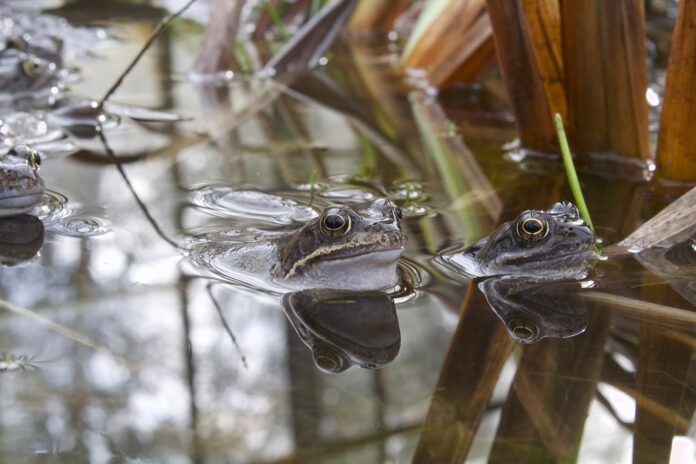
Although well known, the common frog (Rana temporaria) is Ireland’s only native frog species and is listed as vulnerable across Europe. Frogs are considered important biological indicators because their skin is highly sensitive to pollution. Their presence or absence can reveal much about water quality and local environmental conditions. They are protected under both the EU Habitats Directive and the Irish Wildlife Act.
MORE LOCAL RECORDS NEEDED
In 2025, only two frog records were submitted from County Limerick. This low number does not necessarily mean frogs are declining. However, it highlights how urgently more local information is needed.
Limerick City and County Council’s Biodiversity Officer, Sinead McDonnell, is encouraging everyone to get involved.
“We know frogs are out there in Limerick, but we need the public’s help to find them. Even a single sighting, whether it is frog spawn in a garden pond or a frog hopping across a path, can make a real difference. By taking part, people are helping us understand the health of local habitats and protect this much loved species for the future.”
COMMON FROG FACTS
Frogs hibernate through the winter and their name as Gaeilge is ‘Loscán’.
Female frogs lay clumps of frog spawn containing 2,000 to 4,000 eggs in shallow water from February to April. Tadpoles hatch after three to four weeks and live in water, breathing through gills. Tadpoles begin turning into froglets in June or July, growing legs and losing their tails by late summer.
Adult frogs live on land and feed on insects, worms, spiders, slugs and snails. The common frog is protected by Irish law under the Wildlife Act and by the EU Habitats Directive.
HOW TO TAKE PART
Whether it is a pond full of spawn or a single froglet crossing a footpath, every record helps build a clearer picture of where frogs are thriving and where they may need support.
If you spot frog spawn, tadpoles, froglets or adult frogs in your garden, local green space or while out walking, you can submit records directly to the IPCC at www.ipcc.ie; e-mail bogs@ipcc.ie or phone 045 860133
Records can also be submitted to the National Biodiversity Data Centre at https://records.biodiversityireland.ie/start-recording
The IPCC is inviting the people of Limerick to “Hop To It” in 2026 and help protect this iconic Irish species.