
Fossil fuel replacement over the coming decade and a half will reach 90%, with the transition significantly lowering the carbon footprint of Irish manufactured cement, Cement Manufacturers Ireland (CMI) predicts.
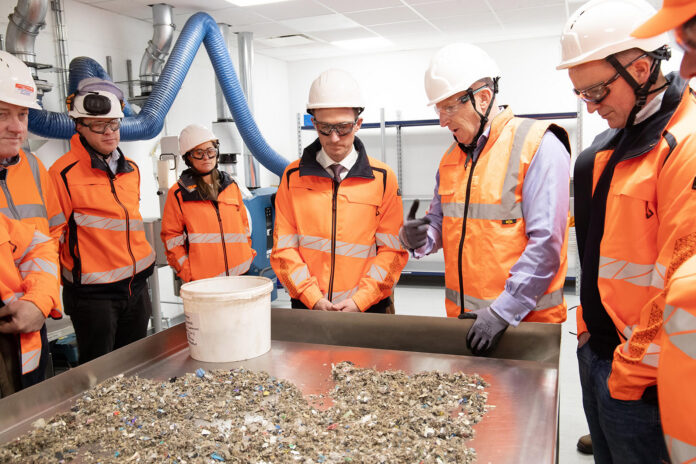
Minister of State with responsibility for the Circular Economy, Alan Dillon T.D. used the opportunity of a visit to Irish Cement Limerick, to launch a new report on the future of Solid Recovered Fuel (SRF) and its strategic role in achieving Ireland’s circular economy goals.
In 2025, the four cement factories in Ireland used over 370,000 tonnes of SRF, which is a low carbon alternative to imported fossil fuels. SRF is a fuel produced from local non-recyclable materials by waste industry partners, which not only supports environmental sustainability but also aligns with Ireland’s national climate ambitions. The transition to alternative fuels like SRF is one of the key levers for cement manufacturers in helping it reach a net zero goal across the full value chain by 2050, as committed to by industry body, Cement Europe.
CMI has published a comprehensive analysis of future SRF supply in Ireland up to 2040, conducted by SLR Consulting, entitled ‘Future Of SRF In Ireland To Fuel Cement Industry Decarbonisation’.
“The opportunity to harness this locally derived fuel (SRF) presents substantial environmental and economic advantages. By fostering collaboration across sectors, we can ensure SRF remains a vital fuel source that supports our climate ambitions and bolsters our local economy,” Minister of State, Alan Dillon T.D. said.
The report indicates that current SRF production capacity reaches about 430,000 tonnes nationally, with key players such as Beauparc/Panda and Thorntons accounting for approximately 70% of total production. SRF is predominantly sourced from household and commercial wastes that cannot currently be recycled and is used as a fuel by all four cement kilns in Ireland.