
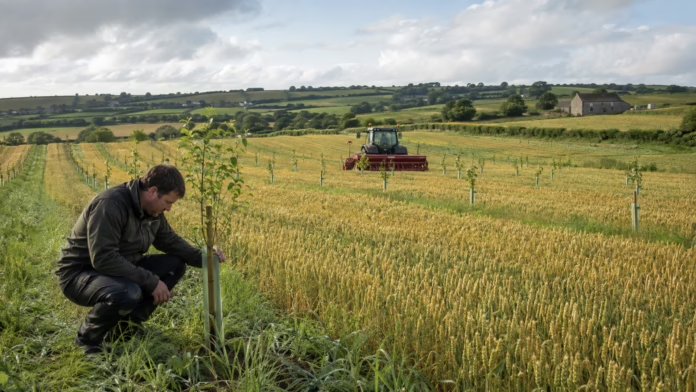
Trees planted through a cereal field may seem awkward when every pass of a sprayer or combine requires clear working space. Ireland’s new silvoarable pilot treats that conflict as a farm design problem.
Introduced by the Department of Agriculture, Food and the Marine following the March 2026 review of the Forestry Programme, the scheme supports arable crops grown between planned tree rows. It offers establishment funding and annual premiums, although participating land also acquires a new legal status.
A New Option for Arable Land
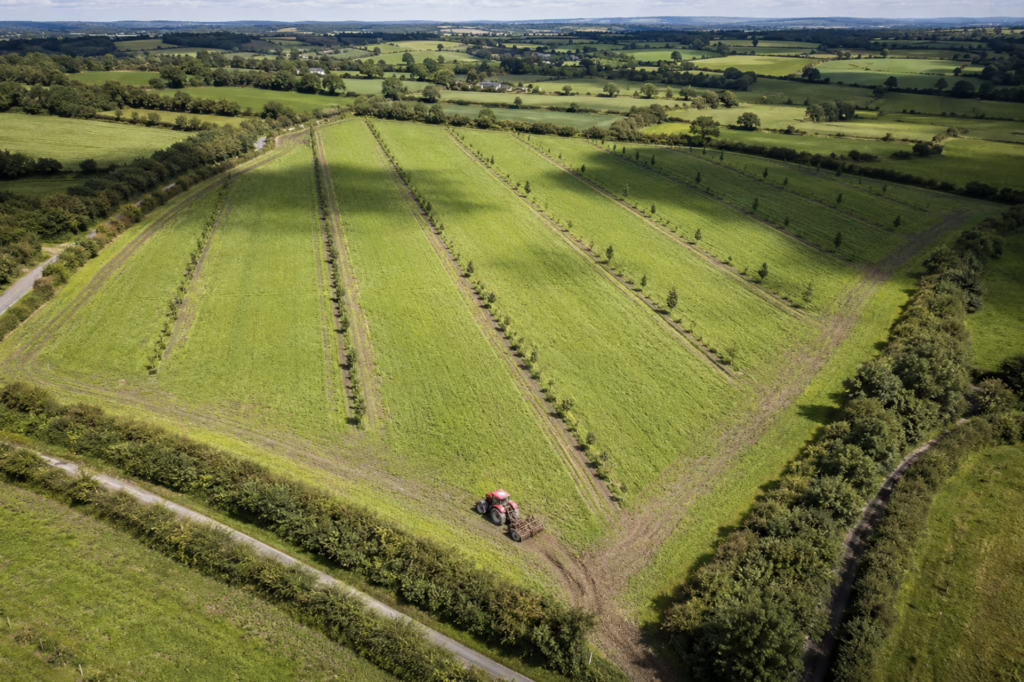
Silvoarable farming combines trees with cereals, oilseed crops, fruit or vegetables on the same parcel. It differs from the silvopastoral model, where protected trees share land with grazing animals.
The pilot appears as Forest Type 13, or FT13, under the Afforestation Scheme. Only land managed under an arable system is eligible. Projects must cover at least 0.5 hectares but cannot exceed 7.5 hectares.
The minimum eligible plot width is 20 metres, measured tree-to-tree. Each proposal is assessed before planting begins.
Machinery Determines the Layout
A silvoarable field still has to function during sowing, spraying and harvesting. Tree rows may suit GPS-guided machinery, but their spacing must match the farm’s equipment.
FT13 permits a maximum gap of 25 metres between rows. Alternative arrangements require individual assessment. Headlands must allow tractors, combines and trailers to turn without damaging trunks or compacting soil around the roots.
Planning should account for:
- working width of the drill, sprayer and combine header;
- turning circle of the largest tractor and trailer;
- position of drains, gateways and overhead cables;
- prevailing wind and possible shelter;
- shading as the crowns develop.
A layout that works with young whips may become restrictive once branches spread. Machinery access needs to be considered over decades.
The Grant Is Substantial but Staged
The silvoarable pilot requires at least 400 trees per hectare. Its support package combines an establishment grant with annual payments.
| FT13 support | Current rate |
| Establishment grant, excluding fencing | €6,000 per hectare |
| Annual premium | €829 per hectare |
| Premium period | 10 years |
| Maximum pilot area | 7.5 hectares |
Unlike an instant payout online casino, where approved funds may reach a customer within minutes, FT13 funding is released only after eligibility has been confirmed, planting completed and the required establishment checks passed.
The rates, dimensions and stocking rules appear in Teagasc’s official FT13 guidance. Fencing is not included in the €6,000 rate. Protection against rabbits, hares or deer may still be required.
Mixed Species Are Required
The pilot does not support a single-species plantation. A project must use at least three and no more than five tree species. Eligible choices include oak, sycamore, Italian alder, red oak, walnut, Spanish chestnut, birch and cherry.
Scots pine may account for no more than 15% of the trees. Fruit and nut trees have a ceiling of 20%, while other conifers can be considered individually.
Species selection affects the farming system:
- crown size influences future shading;
- roots can compete with crops;
- flowering periods support different insects;
- timber quality depends on pruning and stem form;
- tolerance of exposure varies between species.
Italian alder may suit exposed land, while walnut or cherry can produce higher-value timber under suitable conditions. Both still require careful establishment and formative pruning.
Tree Numbers Will Change
The initial 400 trees per hectare will not remain for the full rotation. Teagasc expects thinning eventually to leave approximately 100–150 trees per hectare, reducing competition and maintaining light for the crop.
The remaining trees need straight stems and balanced crowns. Poorly formed specimens can be removed during thinning. Root pruning may also become necessary if roots spread heavily into cropped alleys.
Early management is likely to include:
- Replacing failed trees during establishment.
- Controlling vegetation around each stem.
- Checking guards and fencing after bad weather.
- Pruning competing leaders.
- Recording survival and growth ahead of inspections.
Bare-root trees are normally planted while dormant, generally between November and March.
Benefits Depend on Field Design
Tree rows can slow wind and reduce soil movement. Their roots and fallen leaves may improve nutrient cycling, while woody growth stores carbon. Flowering trees and uncultivated strips can also provide habitat for pollinators and insects that prey on crop pests.
These gains are not guaranteed. Dense crowns may reduce crop yield near the rows, while poorly positioned trees can interfere with spraying or create wet turning areas. The field also carries two production timescales: an annual crop and timber measured in decades.
The clearest financial figure during the first ten years is the €829 annual premium. Future timber or nut income depends on species, stem quality, management costs and the eventual market.
Forestry Status Changes the Commitment
Once accepted into agroforestry, the parcel is classified as forest land and becomes subject to Irish forestry legislation. Trees cannot simply be removed because the layout later proves inconvenient. Felling and replanting obligations may apply under the Forestry Act 2014.
A forestry adviser can assess soil, exposure, suitable species and environmental constraints. An agricultural adviser can test the proposed rows against existing machinery and crop rotations.
The pilot gives Irish tillage farms a funded opportunity to test this land-use model on a limited area. Its success will depend on whether crops, trees and machinery can still share the field efficiently as the planting matures.