

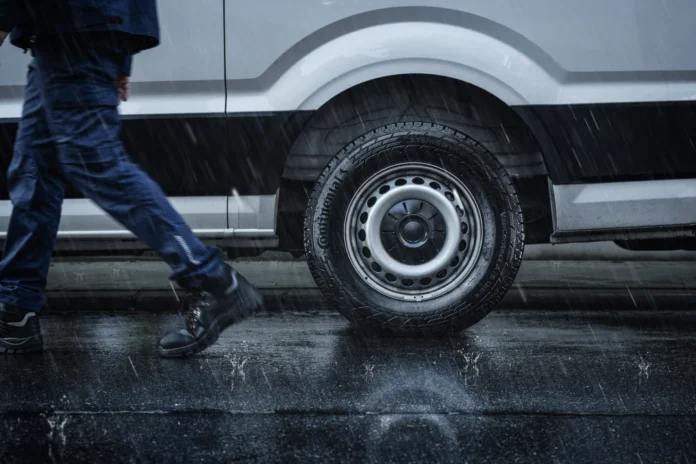
The Road Safety Authority (RSA) oversees Ireland’s vehicle roadworthiness programmes, ensuring that both private cars and commercial vehicles always meet essential safety standards. For vans and other commercial vehicles, this responsibility is delivered through the Commercial Vehicle Roadworthiness Test (CVRT). Just as with the NCT for cars, the purpose of the CVRT is simple: to make sure every working vehicle is regularly checked to ensure they are safe, compliant with regulations, and fit for daily use on the roads of Ireland.
RSA data shows that tyre-related issues remain one of the most common reasons vans fail the CVRT. In 2025, in excess of 77,800 tests were failed due to defects related to tyres. That was 16.66 percent of total CVRT tests carried out last year (467,022) meaning that tyres were the fourth highest reason for failure. The top three reasons for failure last year were 1. a vehicle’s suspension system (119,255); 2. mechanical condition and operation (88,052); and 3. issues with the vehicle’s chassis or frame (77,854).
Premium tyre manufacturer Continental is reminding van drivers and fleet operators that tyres are often the easiest part of the test to prepare for – especially when compared with the more complex technical failure points mentioned above, which often require the input of a trained mechanic to detect and put right.
According to Tom Dennigan of Continental Tyres Ireland, many of the tyre problems that lead to a failed test can be spotted long before a vehicle reaches the CVRT centre. “A simple visual inspection of the tyres can prevent a lot of hassle. If a driver or fleet manager is unsure about the condition of the tyres, a quick visit to a local tyre dealer can give peace of mind. Most will carry out a tyre check free of charge.”

Dennigan also highlighted the heightened safety implications for commercial vehicles. “A fully loaded van presents a much greater risk in the event of a tyre failure than a standard car. The additional weight means a van will take significantly longer to stop, so ensuring tyres are in good condition is absolutely critical.”
Continental is encouraging all drivers – whether operating a van or a private car – to carry out tyre checks a couple of times each month, not just in the run‑up to a roadworthiness test. A few minutes spent checking tread depth, tyre pressure, and signs of damage or uneven wear can prevent accidents and help ensure a smooth CVRT or NCT experience.
“Tyres play a vital role in braking performance and overall vehicle control. Drivers and fleet managers have a responsibility to stay on top of tyre maintenance. By doing so, they not only improve their chances of passing the CVRT but also contribute to safer roads for everyone.”