

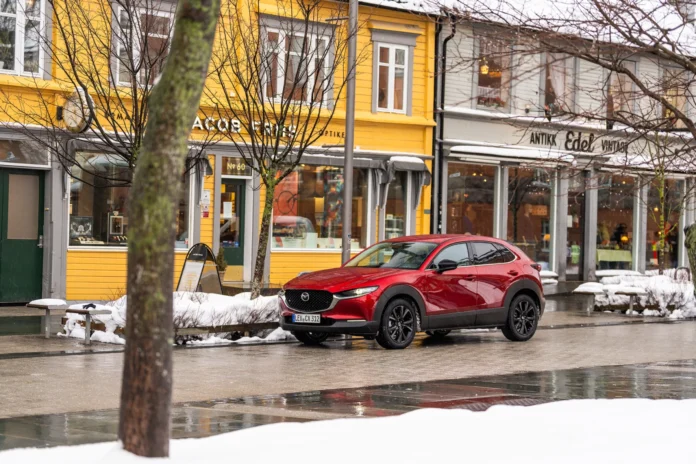
For some, winter means cosiness and adventure: skiing trips, frosted landscapes, and evenings by the fire. For others, it means stress, particularly when driving. Here’s how to make driving through snow and ice a more pleasant experience.
Preparation is never more important than in winter. And good preparation starts with a car equipped with the right tools for the job – first and foremost winter-ready tyres with a strong tread. The right choice depends on where and how you drive: from mild urban winters to alpine passes or the frozen roads of the far north.
In Europe, there are three main categories:
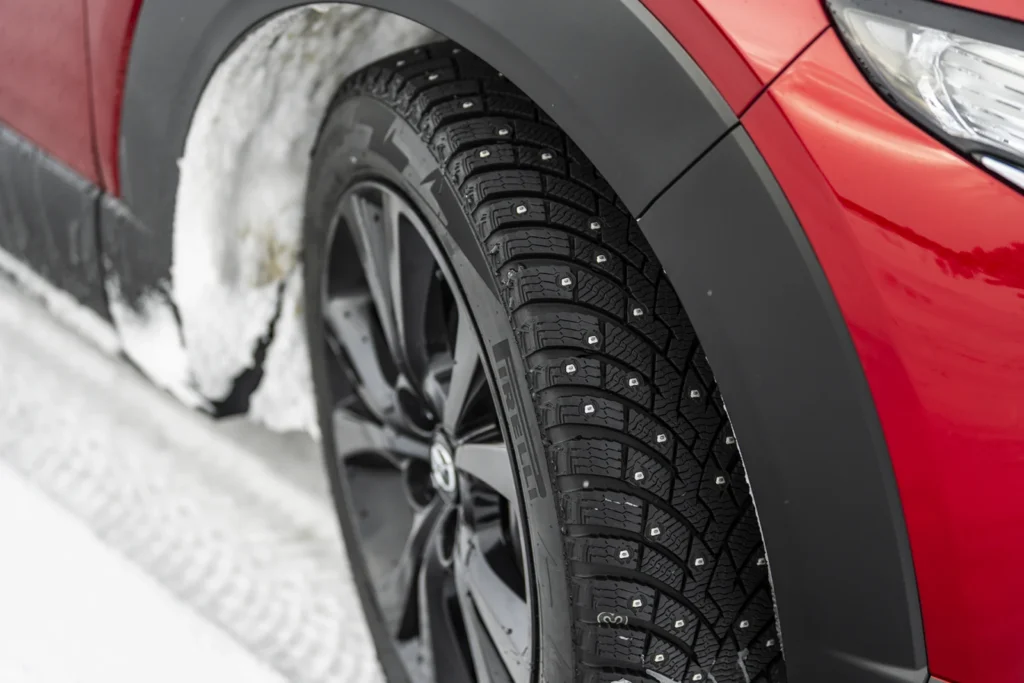
- All-season tyres: An increasingly popular choice. They carry the snowflake symbol and are legal in winter. For regions with mild winters and changing conditions, they can be a practical and safe option. Modern all-season tyres often perform well on wet and cold roads and provide year-round convenience for drivers with moderate mileage.
- Alpine winter tyres: The standard for most of Central Europe. Their harder rubber compound remains stable even at above-freezing temperatures, while deep grooves clear water and slush. They provide balanced safety on dry, wet, and snowy roads.
- Nordic winter tyres: Designed for harsher climates in Scandinavia and parts of Eastern Europe. Their very soft compound and dense siping grip snow and ice firmly, even at minus 20 degrees. They offer maximum safety on frozen roads but can wear quickly and may feel less precise on wet or dry asphalt.
In deeper snow or when mountain passes turn icy, snow chains still matter. They improve traction when tyres alone reach their limits. In countries such as Austria, Italy, or Switzerland, carrying chains is mandatory in certain regions or under specific weather conditions.
Visibility is another factor in preparation that is often underestimated. Clearing every window before setting off – plus any snow from the roof – is as important as keeping a careful eye on the road ahead. Equally important is to be seen by others. Headlights, brake lights, and indicators must also be cleared of snow and ice, so that every signal reaches fellow drivers without obstruction.
Driving with Calm Precision
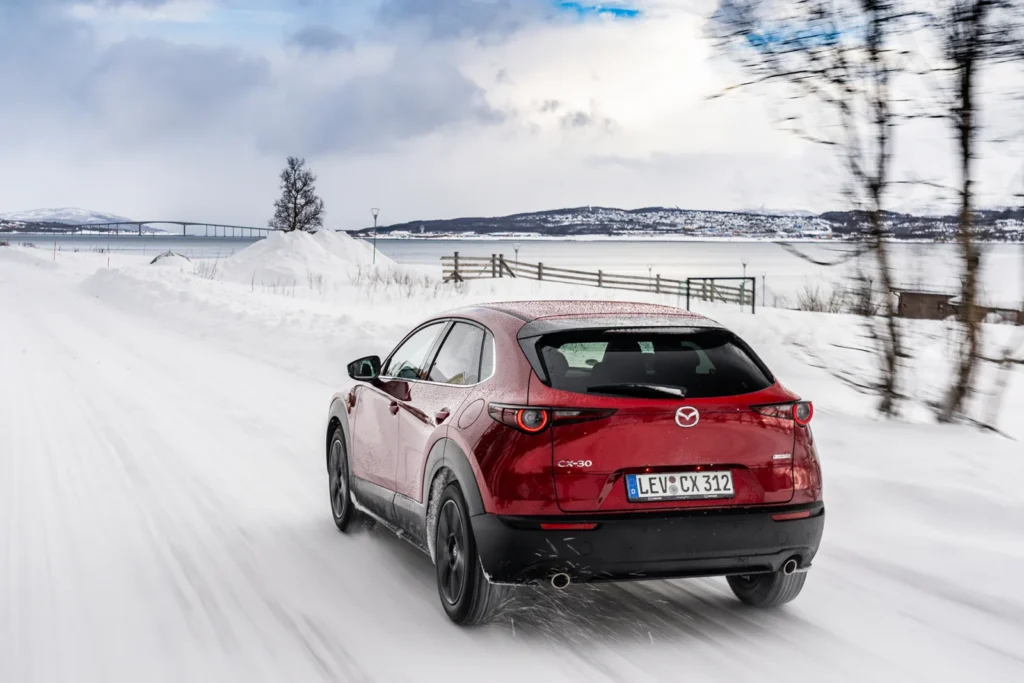
Once underway, winter demands a gentler style of driving, a willingness to slow down and let space open up between vehicles. Steering and braking calmly and with foresight helps prevent sudden weight shifts that can render a car unstable on snow or ice, and underlines the value of longer braking distances.
A steady hand, foresight, and appropriate speed are key factors in mastering challenging driving conditions. When paired with the support of modern vehicle technologies, these habits transform winter driving into a safe and controlled experience.
Technology that Supports
However attentive and experienced the driver, support in unpredictable conditions is welcome. Snow, slush, and ice can change a road from one moment to the next. In such situations, technology provides a safety net.
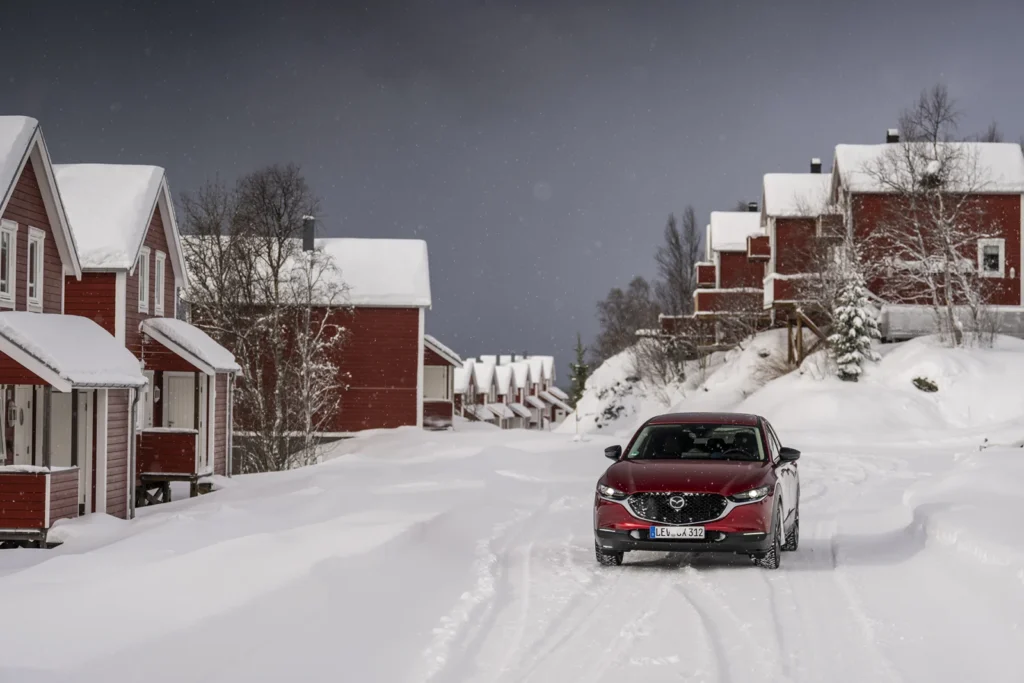
All-wheel drive, such as Mazda i-Activ AWD, offers increased stability and traction. The system constantly monitors grip and balance and distributes power to each wheel as needed, helping the car stay composed when surfaces turn slippery. Additional assistance comes from systems such as Dynamic Stability Control, Electronic Brake Force Distribution, and G-Vectoring Control, stabilising the car through corners, balancing braking forces, or smoothing steering inputs.
These functions support the driver without being intrusive, providing the stability needed to handle winter roads.
Comfort and Clarity Support Safety
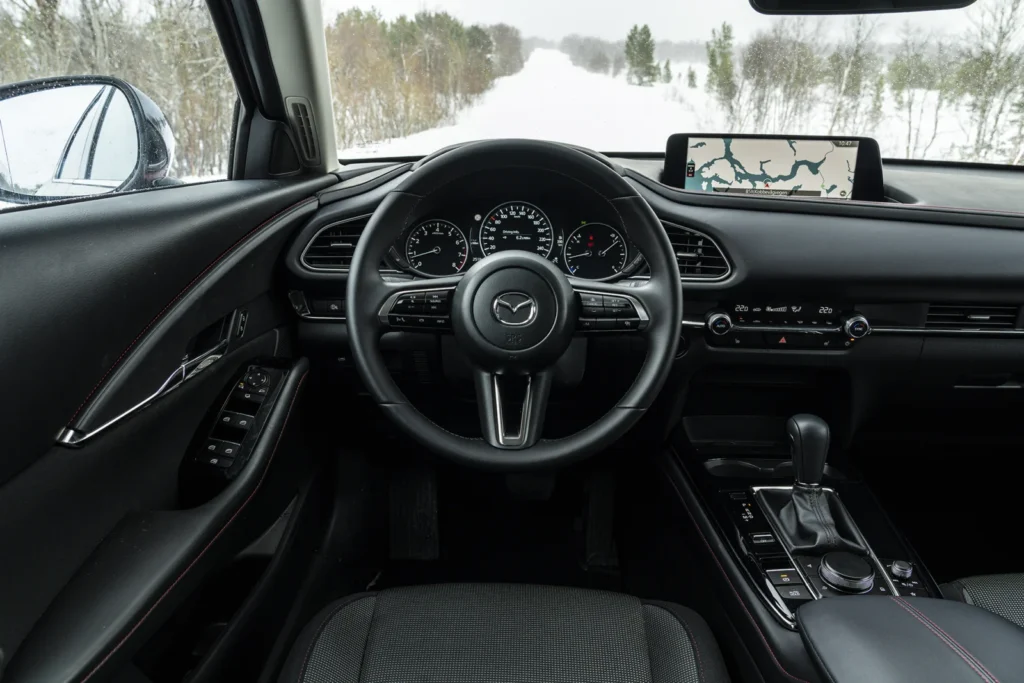
Even with the best technology, concentration remains one of the most valuable resources in winter driving. For a driver, shivering with cold or having to scrabble for controls is distracting and unsafe. Comfort is thus not a luxury, but something that underpins focus. Mazda cabins are designed to support this.
Heated seats and a heated steering wheel, along with quick-acting climate control, create a warm environment that allows the body to relax and the mind to stay focused. Clear ergonomics ensure every function falls naturally to hand.
Equally important is the design itself. Distractions must be minimised, which is why Mazda interiors follow the Japanese principle of Ma – the use and harmony of open space. Surfaces are clean, transitions seamless, and controls placed where intuition expects them. The result is an environment where drivers feel at ease, free from confusion.
In short: With the right preparation and attentive driving, alongside comfort and reliable technological support, driving through snow and ice becomes a safe experience.