
There’s a field on the edge of a Tipperary village where for a few years a proposal at the site of Ireland’s own Las Vegas. This was the idea of one man and would have stretched out across an 800-acre site beside the M8 motorway at Two-Mile Borris.
There would be a Strip-style casino, a 500-room hotel, an all-weather racecourse, a greyhound track, an equestrian centre, a golf course, a 15,000 seater entertainment venue, a heliport and even a full-size replica of the White House.
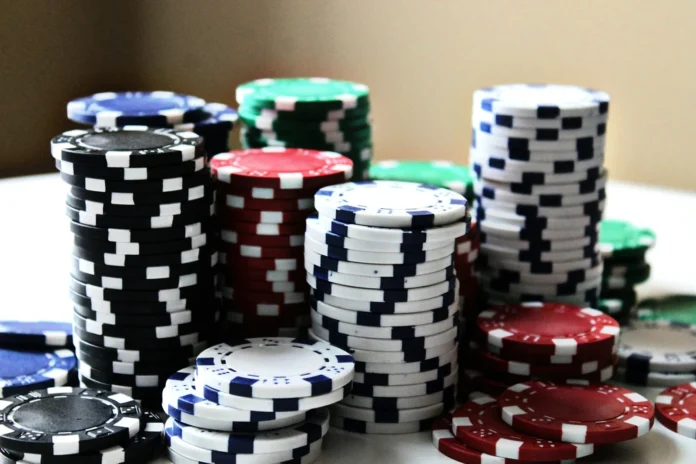
However, this field remains a field 15 years later, during a time when most people prefer to use an online casino in Ireland, as opposed to land-based gambling. The story of why the grand casino project never grew legs is a fascinating one.
Dr Quirkey’s Dream
Richard Quirke was the man with the visions of the Tipperary Las Vegas. He was a former garda who generated massive wealth through his amusement arcades, with the flagship being Dr Quirkey’s Good Time Emporium on O’Connell Street in Dublin.
Quirke is from Thurles originally, which is why a Tipperary site was on his mind when he lodged a planning application in 2009 with the North Tipperary County Council for the Tipperary Venue. This was at a time when the Celtic Tiger was collapsing and Irish banks were lending less around him. He had an ambitious plan that came with a €460 million price tag.
Quirke was famously press-resistant, but was still bullish about arranging all of the financing, which would be a combination of his own money and investment from foreign parties. It had some public support, most notably from local TD for Tipperary North Michael Lowry, who said it would be the most ambitious project ever seen in Ireland and believed that it could create about 2,000 jobs.
Others who reportedly gave the project their support included concert promoter Denis Desmond and champion horse racing trainer Aidan O’Brien.
Initial Progress Stalled By Political Interference
Momentum was building for a while, most notably when An Bord Pleanála, in June 2011, granted permission for the casino, hotel, and racecourse elements of the project, although it refused permission for the 15,000-seat music venue, as it didn’t believe it was appropriate for such a rural location. Quirke seemed happy and urged his team to continue with the plans.
However, the big stumbling block was Irish gambling law and the political sphere, which at the time was built around the 1956 Gaming and Lotteries Act. There was no provision in the legislation for a casino of that scale, with Quirke gambling that the Oireachtas would change the laws to accommodate this project, which they ultimately refused to do.
Minister for Justice Alan Shatter delivered the news about a Cabinet decision in September 2011 that there was no need for a resort style casino in Ireland and that any new legislation would only relate to small establishments.
Taoiseach Enda Kenny said that the decision would protect young people and vulnerable individuals from gambling harm.
Fading Out of Relevance
The project didn’t die dramatically, but it was a slow bleed into irrelevance. The government published its Gambling Control Bill in 2013. The new law wouldn’t permit as many gaming tables as the Tipperary venue had hoped to offer, which was a secondary blow.
Quirke tried pivoting, getting planning in 2013 for a redesigned project with more of a sporting focus, especially for equestrian and racing. There’s even a concept video that pitched the idea of hosting the World Equestrian Games. The project secured later extensions to planning permission, but ultimately no ground was ever broken.
The commercial landscape started turning at this time, with Quirke’s core casino business suffering a €483,000 pre tax loss one of the years, having made millions in profits as recently as 2011.
The planning permission eventually expired and Richard Quirke died in October 2024, with the Tipperary Venue being an unrealised dream. No investor in the meantime has stepped in to try to revive the project with the field still being an agricultural area.
Not Having Sufficient Support
Ireland has never realised the type of Vegas-style casino that Quirke envisaged. The country’s gambling regulation for decades has been a patchwork covering bookmakers, amusement arcades and private member clubs that operate under a legal grey zone.
While Two-Mile Borris was the most extravagant proposal in Ireland’s gambling scene, there have been other instances in recent years where similar types of projects failed to get off the ground.
Plans for a large casino in the suburbs of Cork city were refused in July 2024. City planners stressed, as it warned about the high potential for nuisance that such a facility could bring to the area.
Similar drama played out more recently in Galway, with Silverwright Limited submitting plans in April 2026 to convert a unit at the Wellpark Retail and Leisure Park on the Dublin Road into a casino.
The Galway City Council refused permission in June 2026 after a large number of local objections, with concerns raised over traffic and the well-being of young people. The company quickly appealed the decision to the national planning authority, where it remains for now.
Finally, an attempt to create a gambling arcade in a former butcher’s shop in Ballyfermot, Dublin was withdrawn after fierce local opposition.
Changing Times
All of this comes at a time when Ireland is undergoing its biggest overhaul of gambling law in generations. The Gambling Regulation Act of 2024 changed a lot and created the Gambling Regulatory Authority of Ireland (GRAI), which became operational in March 2025.
The new law doesn’t roll out the red carpet for any resort casino. The policy that held up the Two-Mile Borris project remains. What it does do is introduce a new licensing regime for betting, gambling and lotteries over online and in-person operations.
There’s also more money going towards funding gambling harm treatment, with the regulator having wide-ranging enforcement powers, including the ability to issue fines of up to €20 million. The potential for a casino resort to get traction looks slim to none at this stage.