
In April this year, DS launched new versions of their No 4 and No 8 cars in the luxurious Marlfield House in Wexford, but there has been a bit of a delay in getting the cars on the press list, especially the No 8.
Last week I got to test the No 4 and Jana Solovjova, Marketing Manager at DS Ireland, tells me that they will have No 8 on the press fleet very soon.
The No 4 was originally launched, back in 2021 as the DS4, but it has been renamed in line with DS Automobiles’ new Chanel-like badge policy.
The French have a reputation for being very stylish and the nation has been able to appreciate the stylish range of DS cars since the brand was launched at the Paris Motor Show in 1955.
DS models have transported French presidents since the sixties when Charles De Gaulle credited a DS with saving his life. In August 1962 militants opened fire on De Gaulle’s car in the Petit-Clamart area of Paris as he was being driven to a local Air Base. Two of the president’s motorcycle bodyguards were killed and the DS was riddled with bullets. All four tyres were damaged, but thanks to the chauffeur’s skilled car control and the Citroën’s ability to carry on almost unaffected by the punctures, De Gaulle and his wife were not injured.
Some cities in France have seen a lot of riots in recent weeks and I checked to see where DS cars were being manufactured. And guess what it’s in Germany, at the Stellantis plant in Russelsheim on the shared platform with Opel Astra and Peugeot 308. Yes, there is a lot sharing in the motor manufacturing industry right now.
But no mistaking all that French style. Externally, there are some lovely touches and, on the dash, you don’t have to move the various buttons for Air Con etc, you just touch them.
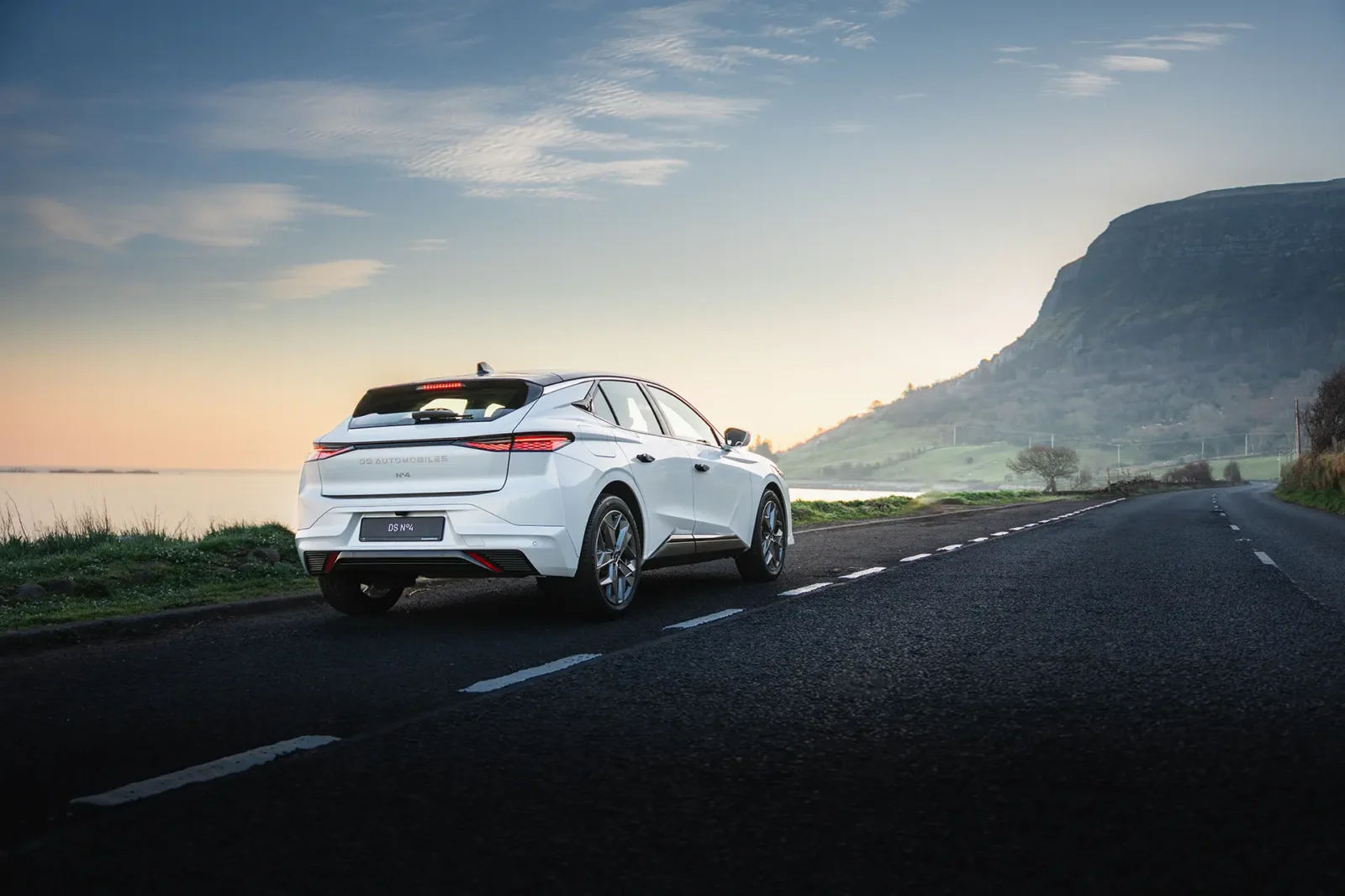
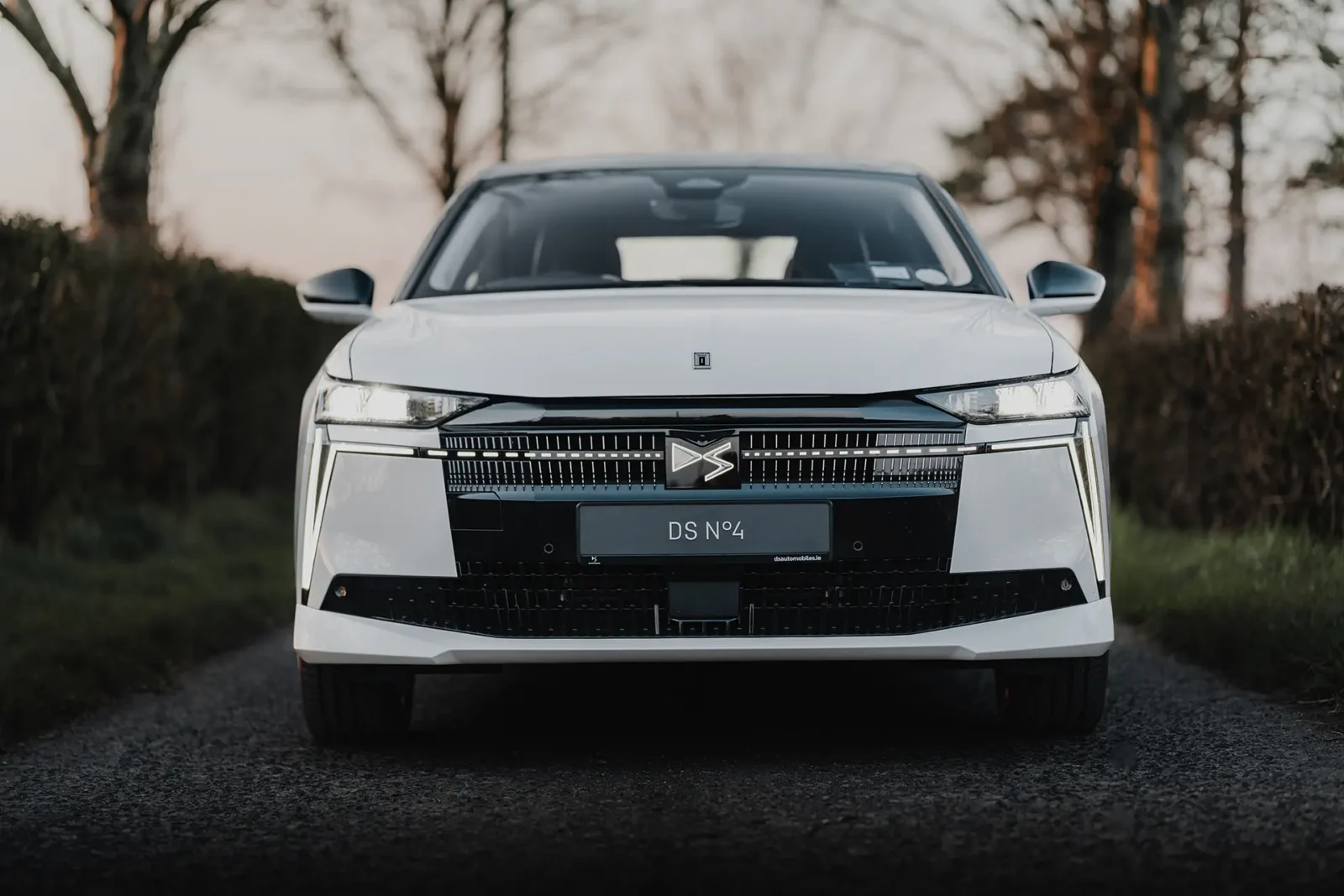
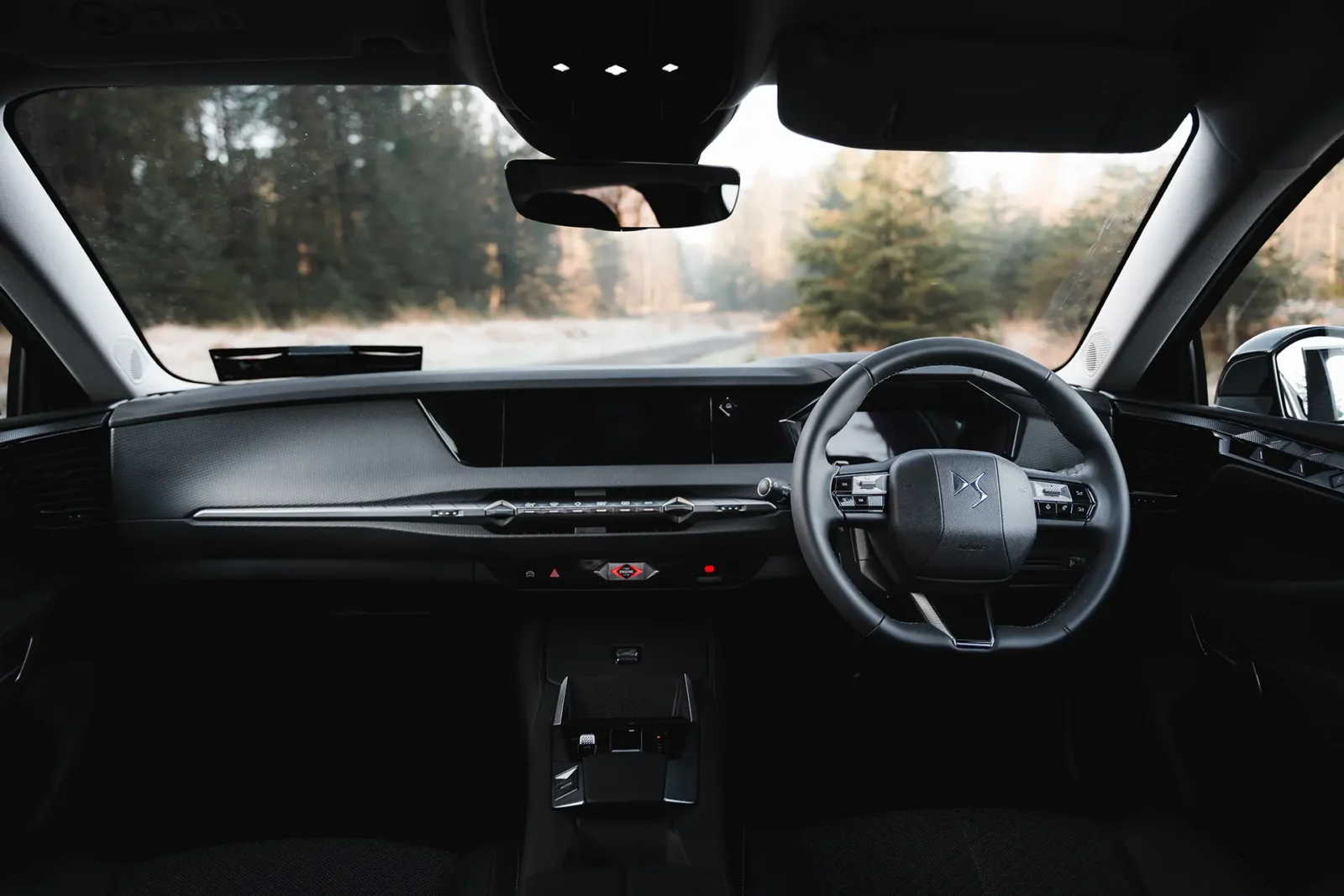
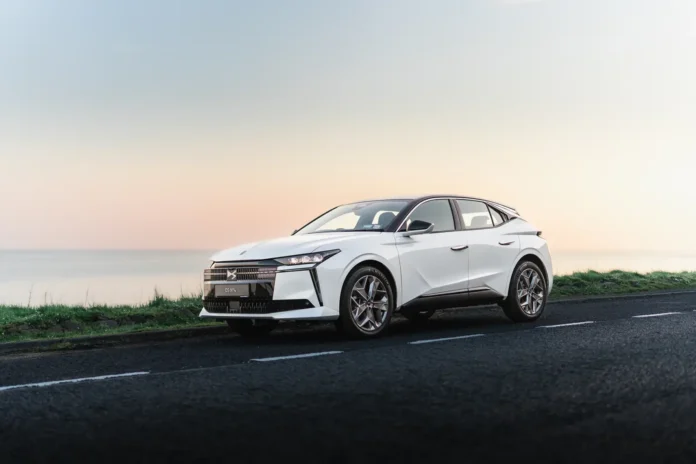
When you sit into the No 4 you will be immediately impressed with the sculpted bodywork, dramatic lighting and coupe-inspired profile. The cabin is a little dark, but the neat 10.52-inch infotainment screen on the dash gives you all the information your require.
There is plenty of room for five well-built adults and 430 litres of boot space in the hybrid version. Also, in the boot there is space underneath for a spare wheel, but like most new cars nowadays, no spare is provided.
While the new name was being applied, the DS design team under Thomas Duhamel, also gave the No 4 a new nose, with a deeper, more pronounced grille, and some other subtle design tweaks on the outside. Even the front indicators are classy looking, especially at nighttime.
More importantly, the No 4 now has new powertrains. The first is a 1.2-litre hybrid, with 145hp. The second is the fully electric DS No 4 E-Tense, with a 58kWh battery that should give you a range of up to 450km on a warm day.
When I picked up the hybrid version, the range with a full tank of petrol read 660km and the fuel gauge moved very slowly.
The No 4 is more affordable now than when first launched here as the DS4. It probably better able to compete with the likes of the Audi A3 and BMW 1 Series and has a starting price of €35,995 for the entry-level Pallas spec in hybrid form, rising to €42,995 for the fancier Etoile model. The EV version of the No 4 starts at €44,010 for the Pallas version.
DS used to be part of the Citroen brand, but now they are a stand-alone brand. Any time I drive a DS people come up to me and ask what make of car is that?
It’s looks like only experienced ‘tyre-kickers’ know about the famous French brand. I think the new versions of the No 4 and No 8 should help inform the Irish public more about these classy cars.